Starting a Homelab the Right Way - With the Why
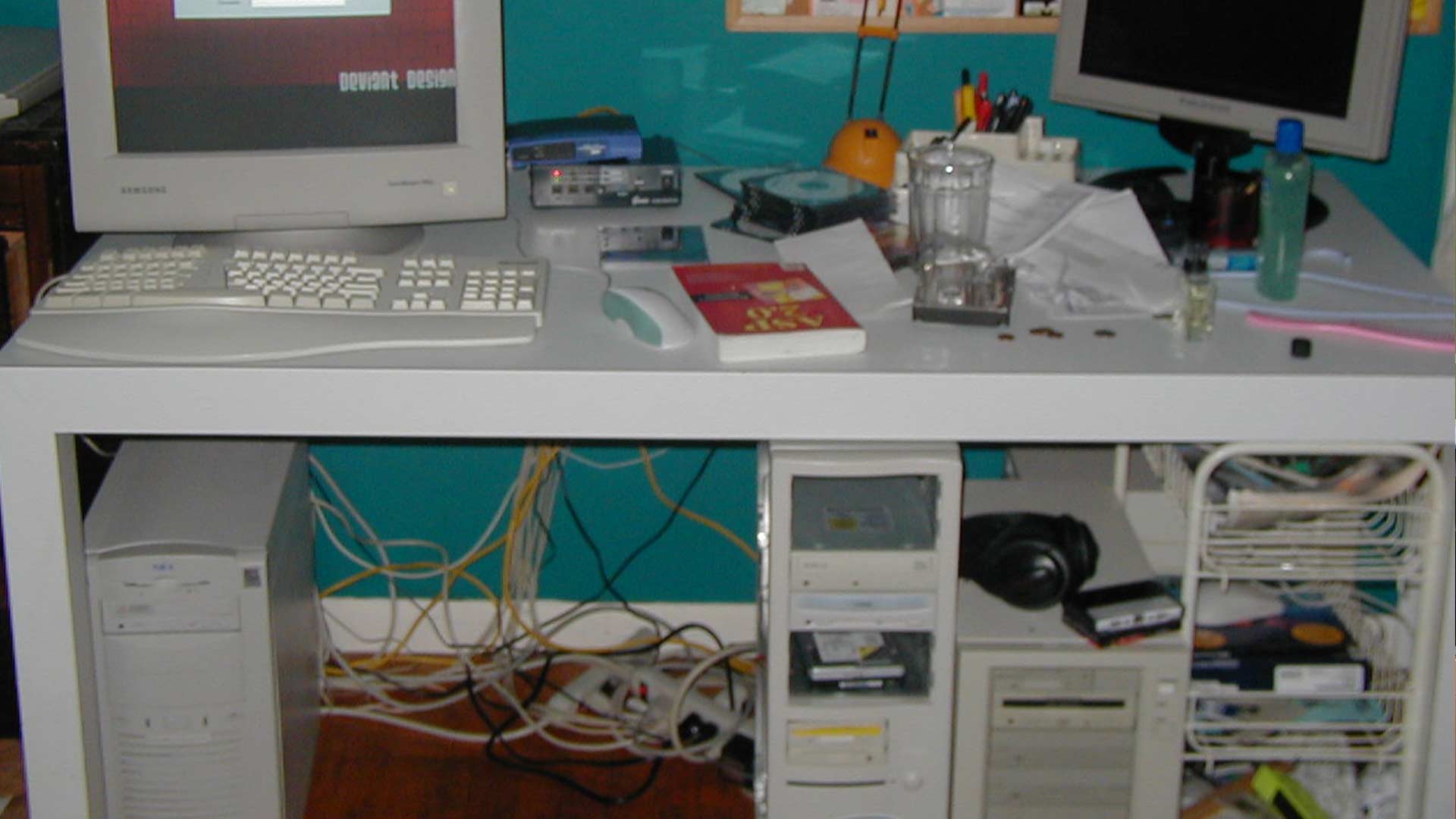
There’s a pattern I’ve noticed in Homelab culture: people start with hardware.
Racks of it. Blinking lights, enterprise gear pulled from datacenters, computing clusters before identifying a single problem they’re trying to solve.
It looks impressive, but it skips the most critical step: intent. If you want to start a Homelab the right way, you start with intent. I like shiny things as much as the next person, and this lesson took me more than twenty years to fully understand.
2003: Curiosity Got its First Upgrade
In 2003, I brought a Cisco Catalyst 2900XL switch home, after it was decommissioned from a production colocation cabinet at the old Globix Chinatown datacenter. It spent years handling traffic for a cabinet filled with Compaq ProLiant servers running the public and program-related sites for the first organization I worked for.
I managed it carefully for years; it was the first managed switch I ever worked with. It existed in a production environment that didn’t tolerate experimentation and once added to my home network, that changed. For the first time, I could explore Cisco IOS without consequence. I could create and break VLANS, reconfigure trunks, and read through command sections I never dared touch in production.
Did I need a managed Cisco switch at home? Absolutely not, but it gave me something consumer hardware couldn’t - controlled exposure to enterprise behavior. It didn’t present major speed improvements, but it did present an opportunity to improve the speed at which my methods of engineering networks matured.
2004: Getting Serious about Data Protection
About a year after upgrading my network, I had the opportunity to bring home an HP LTO autoloader. It was absolute overkill, but helped me continue my evolving ideas around data protection that had been at the forefront of my workplace efforts since 9/11.
I had outgrown manual tape swaps on my home network. A few hundred gigabytes of data doesn’t sound like much today, but it felt enormous at the time. The old Onstream ADR-based backup drive I had used for several years felt like someone stretched some Travan tapes and slapped a new label on them – and I was ready for that LTO life. Having an autoloaded didn’t just further automate my backup strategy, it forced me to think operationally.
Sets of tapes were stored in a safe, similar to how I’d manage tapes for work. BackupExec replaced ntbackup.exe and agents confidently backed up my Microsoft SQL servers. Restores were tested in ways that build confidence in them, and I no longer had manual backup tasks (even if just swapping tapes) on a nightly basis; it felt grown up.
My home environment began to resemble small-business infrastructure. Once that discipline moves beyond the 9-5, it follows you everywhere. Over twenty years later, my data protection strategies involve a dedicated storage server with a cloud offload – different tools, same general ideas.
2010: Experience Raises Standards
During the winter of 2010, I upgraded the wireless network for the fashion magazine I was working for and probably made the largest error in judgement for a technology purchase – I bought a handful of SonicPoint access points.
Were they bad? I have no idea; they failed long before I could actually use them. It took entirely too many support calls to realize that they were being overpowered by another wireless network on the same floor – one belonging to Dolce & Gabbana.
I found out what they were running and decided the Ruckus Wireless-G units that I could get in exchange for the SonicPoints would solve the problem. A single AP covered the entire office beautifully, changed my expectations around wireless networking, and I got the “thumbs up” to take the 2nd unit home with me.
Once powered up in place of my LinkSys, it changed my expectations permanently. Signal quality and stability improved in ways that were immediately noticeable – and just looked way cooler than the old black and blue. A single enterprise AP doesn’t transform architecture, but it permanently changes what “good” looks like.
2022: Impressive Stops Being Practical
Fast forward to 2022 and my HP DL320 1U server – my favorite pizza box. It was loud, power hungry, and capable – but overkill for my needs. I no longer had a cabinet in the house, so it just sat on a table.
I replaced it with three Raspberry Pi 4 units.
They were quieter, consumed a fraction of the power, allowed me to distribute services, and were much easier to maintain. They’re still running on a shelf above me as I write this and continue to host many services that run 24/7 on my home network. This upgrade changed my definition of “appropriate.” I replaced a single server with 3 SBCs, removing what wasn’t needed in exchange for flexibility (and capability that happily sits on a bookshelf.)
2025: Constraint as a Design Philosophy
Twenty-one years after my first taste of virtualization, Microsoft Virtual PC 2004, came my Proxmox cluster, FOXMOX. Five (almost) matching Lenovo mini-PCs for $150. Almost because one has an 8GB RAM limit – and that’s fine as it ended up as a Proxmox Backup Server.
$150. Low risk, high upside.
If clustering didn’t work out, I’d have standalone hosts or machines to use or pass along. I already had a 10-inch rack, a switch, and the rest of the supporting infrastructure.
The hardware constraints made the project a lot of fun. I had limited CPU, limited memory, and limited spend to spark architectural thinking I hadn’t anticipated. Instead of solving problems with brute-force performance or just throwing more resources in the right direction, I had to think about distribution, resilience, and efficiency. It felt more realistic than many rack builds I see today - where performance is maximized long before any workload justifies it.
The Quiet Incentive Problem
Over two decades, I’ve watched Homelab culture shift, even if I didn’t know the term existed until a couple of years ago (seriously.) It used to be scrappy; it felt similar to rifling through junkyards for a replacement door for my Jeep Cherokee. Now, it’s often spectacular. Vendors send hardware because visibility matters. Creators showcase it because it performs well on camera. Spectacle gets rewarded.
That doesn’t make it wrong, and it would be hypocritical for me to hound about it – I’m sitting at a desk with a UniFi DR7 and 10GbE switch and didn’t pay for either of them. They’re dependable pieces of equipment; one was reviewed in a video and the other didn’t, and you’ll never hear me go on about why you have to have them too. In reality, you don’t. You need what’s appropriate for your needs – and I needed to shoehorn them into my network to kick the tires. Anything beyond that risks distorting the starting point for beginners.
If your introduction to homelabbing is a fully populated rack with enterprise SANs and 10GbE everywhere, you’ll assume that’s the baseline. It isn’t and most of that hardware solves problems that most homes don’t have. Most of that hardware solves problems most homes don’t have, and building infrastructure without a defined problem isn’t education - it’s theater.
The switch used by FOXMOX for dedicated Ceph replication is a $20 TP-Link Gigabit switch and I’m nowhere near saturating anything.
What Starting the Right Way Actually Means
After twenty-two years of iteration, here’s what I’ve learned: start with a question, not a purchase.
- What am I trying to understand?
- What problem am I solving?
- What skill am I developing?
- What operational behavior am I trying to internalize?
Your answers will shape your hardware, not the other way around.
The Catalyst switch taught me about learning safely, the autoloader taught me discipline, the Ruckus AP helped me reset expectations, retiring the DL 320 was a lesson in efficiency, and my Proxmox cluster was a class on architecture under constraint.
Performative vs. Purposeful
There are two kinds of Homelabs – ones that optimize for visibility, and ones that optimize for growth. One accumulates hardware while the other accumulates understanding. Both are fun, but only one compounds in value that provides immeasurable returns when you’re working with technology for a career.
If you begin with WHY:
- You buy less.
- You waste less.
- You maintain less.
- You learn more.
If you begin with HOW, you risk building something impressive that doesn’t make you better. A Homelab should increase confidence and build operational intuition. It should occasionally fail in ways that teach you something. If it simply exists because someone else’s rack looked good on camera, you may want to rethink things.
Over two decades, the hardware has changed but the goals haven’t; build for outcomes. Everything else is just blinking lights.
 The Self-Hosting Responsibility Spectrum
 Homelabs, self-hosting, and doing whatever the fsck you want.
 Running Your Own Mail Server: Lessons from 25+ Years of Chaos and Custody