Every now and then, someone asks why I spend so much time building keyboards and messing around with input devices – it’s a fair question. There are dozens tucked around my workspace, plus there’s usually a production controller and a dumbpad on my desk.
Most people don’t think about keyboards until one stops working. They show up in the same cardboard box as the computer, survive for a few years, and eventually get replaced without much thought. Mine seem to follow me through life.
The Computer Scientist, Eiiti Wada, once compared keyboards to saddles.
To someone who has never ridden a horse, every saddle probably looks the same. They all accomplish the same basic task – but ask someone who spends hours in the saddle every day and they’ll you learn that small differences matter. The comfort and the relationship between rider and horse matter.
Wada sees a critical interface between two systems, not just a commodity – and a critical interface like a saddle, back in the days of the Cowboy, was expensive. New saddles didn’t come with horses like they do when you order a new Dell. In this case, the horse was the consumable to be replaced while the saddle was often kept.
The more time you spend with a quality board, the less interchangeable they become. I didn’t understand any of that when I was four years old.
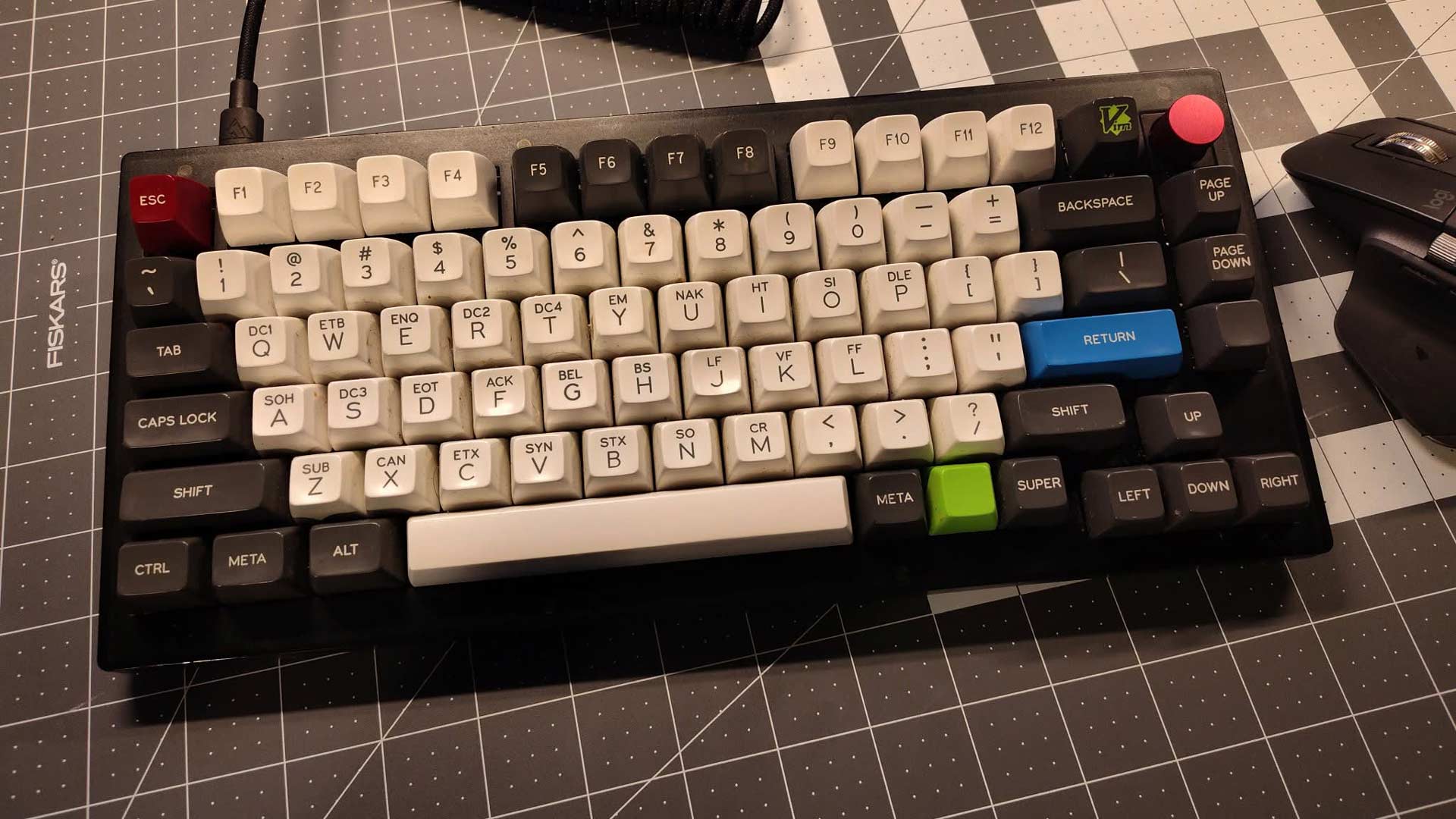
I’m typing this on a Keychron V1 that I’ve had for about 4 years. I clipped the LEDs and re-flashed the firmware after a bit of water damage, replaced diodes after a column of keys stopped functioning, swapped the encoder out twice, and even reenforced the USB connector after a bad fall. Keychron is a great company that makes a great product - this list of repairs represents how hard I can be on my boards - and how servicable this one is.
There’s another, practically new, V1 on the desk I use for assembling and testing hardware, a Q9 Plus sitting in the closet behind me, and a bin filled with custom builds in my attic. Doesn’t matter.
This V1 feels good to type on. Outside of repairs, the key stabilizers were replaced with nicer ones, the standard top plate swapped for one made of brass, it has Gateron Inkv2 switches, and SA caps from Drop (RIP.) The board is sturdy, quiet, and one I can type on for hours without even the slightest feel of wear on my hands. It’ll probably be in use until it gets damaged to where I can’t get it back in working order.
Sesame Street x C64
The first keyboard I ever loved wasn’t mechanical. It wasn’t ergonomic, it wasn’t programmable, and it didn’t go clickity-clack. It was a Sesame Street keyboard connected to a Commodore 64 at my local library.
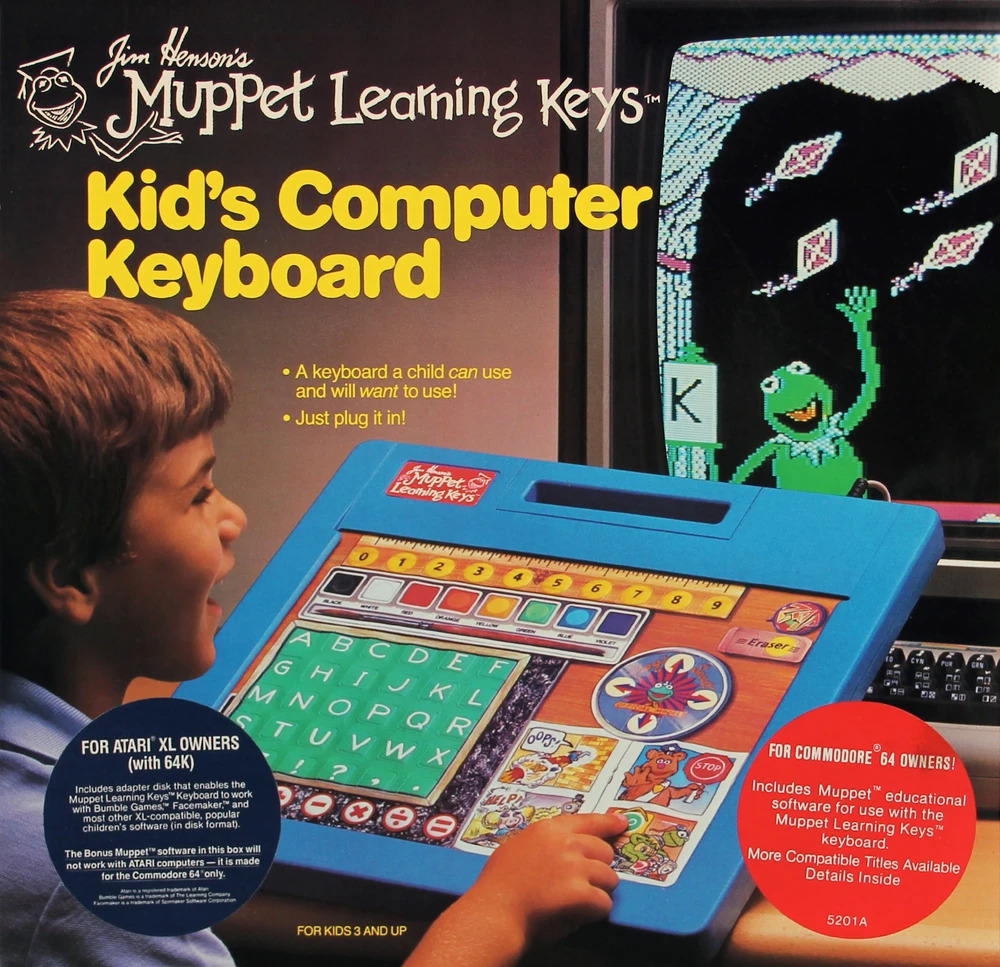
I have no idea how often my parents took me there. Memory has a funny way of compressing time, but I remember wanting to spend as much time as possible sitting in front of that computer. The keyboard was colorful, friendly, and made the entire machine feel approachable.
I wasn’t learning to program or write software, that would happen about a decade later; I was simply discovering that computers were places you could explore. Looking back, I think the keyboard lowered the barrier between me and technology before I even knew barriers existed.
I Need My ALT Codes and Some Dunkaroos
By high school, I had graduated to a Microsoft Natural Keyboard – and the reason wasn’t for the ergonomics. It simply looked cool. It was something you’d see on display when walking into a CompUSA alongside 20lb boxes of Visual Studio and people fighting over Sound Blaster cards – and just know you needed one.
The split layout felt futuristic, and if you grew up watching movies like Hackers or The Lawnmower Man - or went to Sbarro’s to talk about them after getting out of the theatre, anything that made your desk resemble Zero Cool’s setup was an improvement.
Thinking about those boards reminds me that I haven’t even had a board with a numpad for a while now. Looking back, a 15 or 16 year-old self could never imagine that. This was peak AOL troublmaking time and my handle had a trademark symbol at the end. Not being able to type ALT+0153 would have been unthinkable. Thinking about it, I guess the numpad was an absolute necessity until pivoting from daily hands-on work to what I do now.
Over time, something changed. Computers stopped being fascinating and became work. For years, keyboards were simply tools and whatever came I the box was good enough. As long as it typed, I didn’t give it much thought.
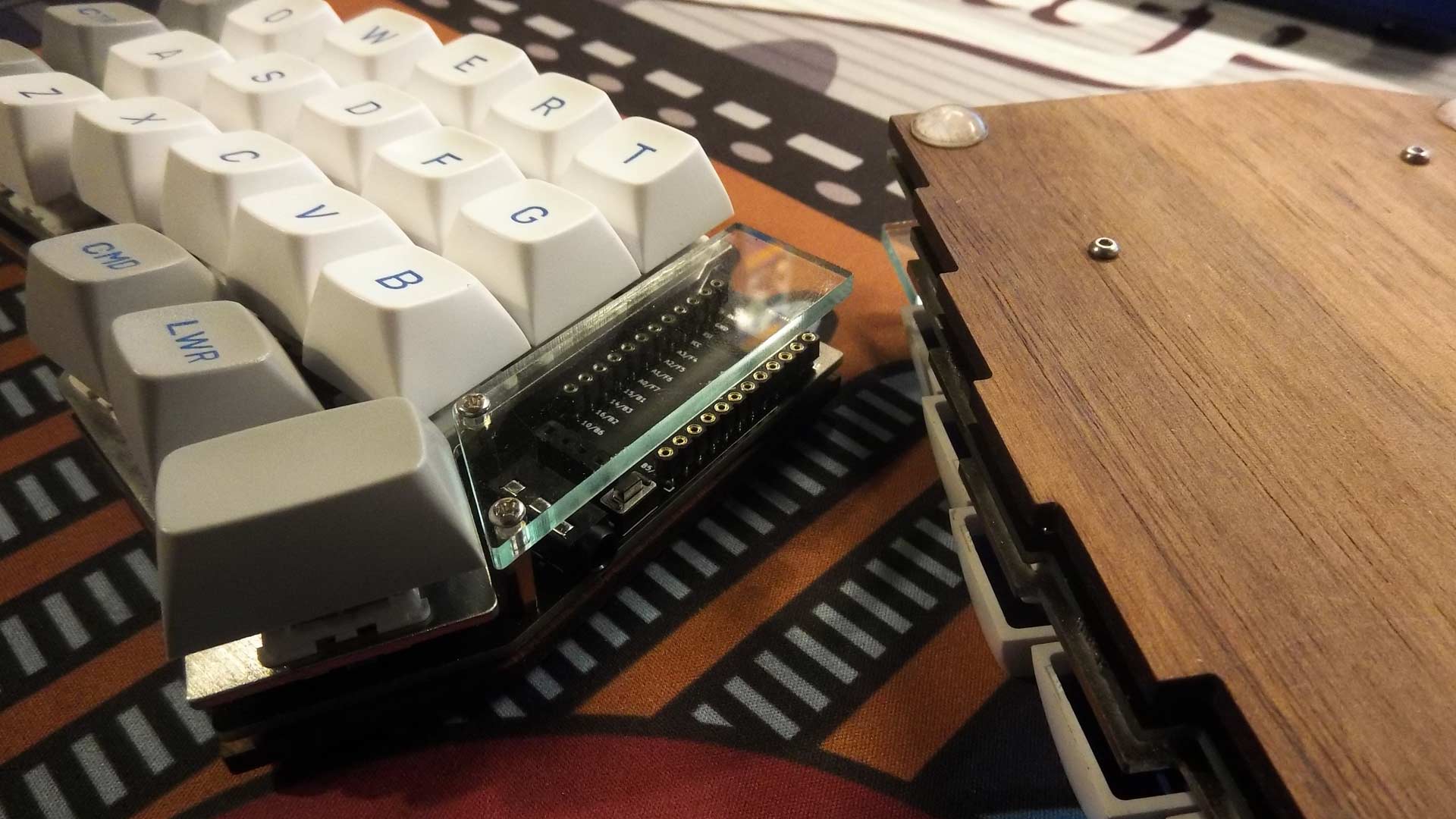
At some point, building boards like Cinnamon Rolls Royce and this Corne just became something to do – but things took a weird turn of events first…
Going Ortholinear
Years later I stumbled across a keyboard called the Planck. Upon a first look, it seemed completely impractical. Forty-two keys arranged in a perfect grid. It had no number row, function keys, or dedicated arrow cluster. It made no sense to me – and that’s why I wanted one. I wasn’t looking for a productivity boost; I wanted a new challenge.
I had no idea that one little ortho would send me down a rabbit hole that eventually filled boxes with PCBs, drawers with switches, and weekends with a soldering iron.
Timing is everything. Early in the COVID pandemic, I managed to do something spectacularly stupid. While working with aquarium nutrients, I accidentally poisoned myself through an open wound. Fortunately, it wasn’t life-threatening, but it temporarily affected my vision and coordination enough that I didn’t feel quite like myself.
What happened next still feels difficult to explain. I developed an overwhelming urge to solder something. I didn’t need another keyboard, my brain simply needed to spend time doing careful, intricate work with my hands. Think of it as my form of therapy with my brand of stubbornness.
Maybe it was a way of proving to myself that everything still worked. Whatever the reason, I stopped asking and started building. One board became five, and I realized it was time to get them in the hands of others once I reached around fifty.
Keyboards as Learning Tools
Somewhere along the way I realized building keyboards isn’t just about the keyboards themselves. A keyboard is one of the few projects that touches almost every part of modern computing while remaining approachable:
- Electronics
- Firmware
- USB
- Manufacturing
- Industrial design
- 3D printing
- Ergonomics
- Programming
- Accessibility
You can teach an incredible amount of technology by building something that everyone already understands. That’s exactly why I ended up leading a keyboard-building session before MSPGeekCon in 2023. People came to build a keyboard, and left having learned a little about almost everything.
Keyboards as Self-care
I’ve also come to appreciate something else. Over the years, I’ve managed to collect an impressive list of injuries. Broken fingers, puncture wounds, and even a hand stuck in a printer’s fuser. It’s enough abuse that my hands have earned a little consideration.
When people ask why I use split keyboards, ortholinear layouts, or low-profile switches, ergonomics is certainly part of the answer – but far from the whole thing.
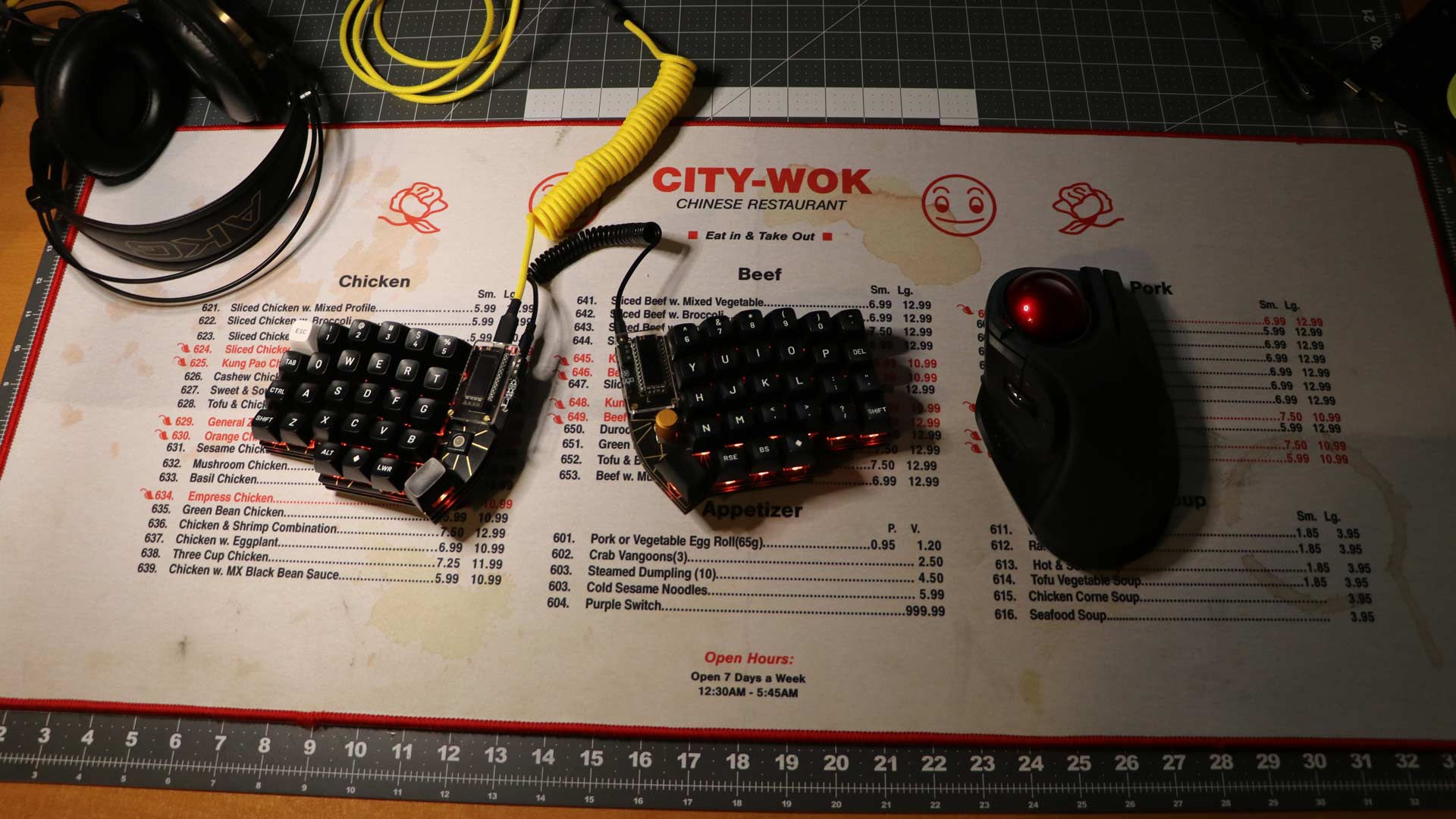
The whole answer is that I’ve spent a lifetime asking my hands to solve problems. They deserve better than whatever disposable keyboard happened to come bundled with the computer – and explains why I’ve never been completely satisfied with sealed, disposable keyboards.
Many membrane-based boards are fine products. Many of them are genuinely well-made and I’ve certainly had my share over the years – but when something wears out you often have to replace the entire thing and that’s just not me. Mechanical keyboards invite a different relationship:
- Worn out switch? Replace it
- Want to change your layout? Go for it
- Prefer a different firmware? Get to flashing
- Bad controller? Swap it out with a replacement or something better
The keyboard evolves instead of expiring. If you’ve followed my writing for any length of time, you already know I tend to keep things for a very long time. I’m writing this at a desk I bought more than twenty years ago. I still drive a 1994 Jeep Cherokee I’ve owned since 2001. Disposable has never really appealed to me. Why would my keyboard be any different?
CTRL-ITCH-DEL, or Hitting F5 on an Old Idea
Lately, I’ve been feeling the urge to build again. I have a Corne Light kit that’s been hanging out on a shelf for too long. Black PCBs, wireless controllers, eInk displays, Sunset Choc switches, and blank caps – just waiting to be built.
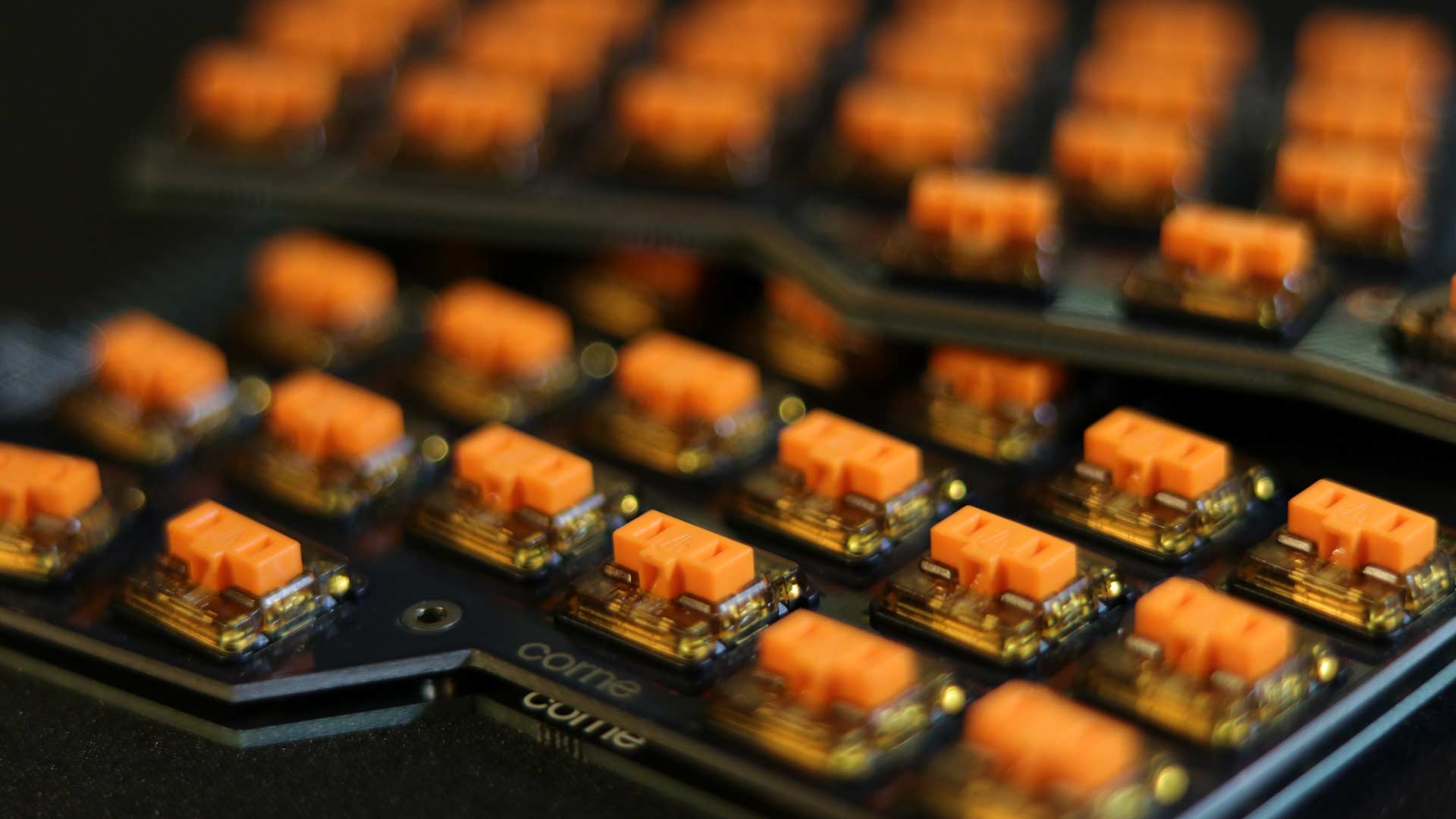
It’s time. Not because I need another keyboard, but because I miss the process. I miss the smell of flux, the quiet concentration and repetitive fine movements, and the sense of calm that comes from controlling my breath as iron meets the board. A lot of satisfaction comes from pressing the first key after hours of assembly and seeing a tiny computer come to life beneath my fingertips.
I’ve been thinking about bringing back an old (improved) idea under a new name. Boarding Pass.
I’m not interested in reviewing the latest keyboard releases or arguing about switch weights, and “thock” isn’t something I care about. There are already people doing that far better than I ever could.
Instead, I’d like to treat it as an invitation. A boarding pass into a hobby that taught me far more than how to type. We’ll build keyboards, but we’ll also talk about electronics.
Repairability, firmware, ergonomics, accessibility, and maybe a little about why the tools we touch every day deserve more thought than we usually give them. After all, my journey started with a keyboard that made a computer feel welcoming to a curious four-year-old sitting in a public library.
I have a bunch of old (terrible) test footage while developing ideas a few years ago. Quick moments to record ideas between meetings, filled with mistakes but fun - and something I’d like to get back to.
If these posts can make someone else feel that same curiosity, I’d call that a pretty good reason to pick up the soldering iron again.
Contents
Tags
Recent Posts
-
observation
 9/11: 25 Years Later
-
self-hosting
 Bumping Integrated GPU Memory Limits
-
self-hosting
 Containerized ComfyUI with ROCm 10 on the Minisforum N5 Pro Running TrueNAS
-
observation
 Under Our Own Power
-
infrastructure
 What Does “Zero Trust” Actually Mean?
-
What Happens When a CVE Becomes a KEV?
-
The Language We Inherit From Machines
-
DNS Decisions: Recursive, Authoritative, and Forwarding Explained
-
The Real Watermark is You
-
I Like My Web Servers Basic AF