This morning felt like the first “normal” morning I’d had in about a week.
Last Thursday night, I partially dislocated my hip. Urgent care managed to get it back into place, and I went home with a prescription for a muscle relaxer. Unfortunately, that medication triggered a small bout of serotonin syndrome.
Between recovering from the injury and my body working overtime to clear everything out of my system, the past week has mostly been a blur. This morning was different.
I woke up hungry for the first time in days. My head felt clear. I could stand on both legs without thinking about it. For the first time in a week, I felt balanced.
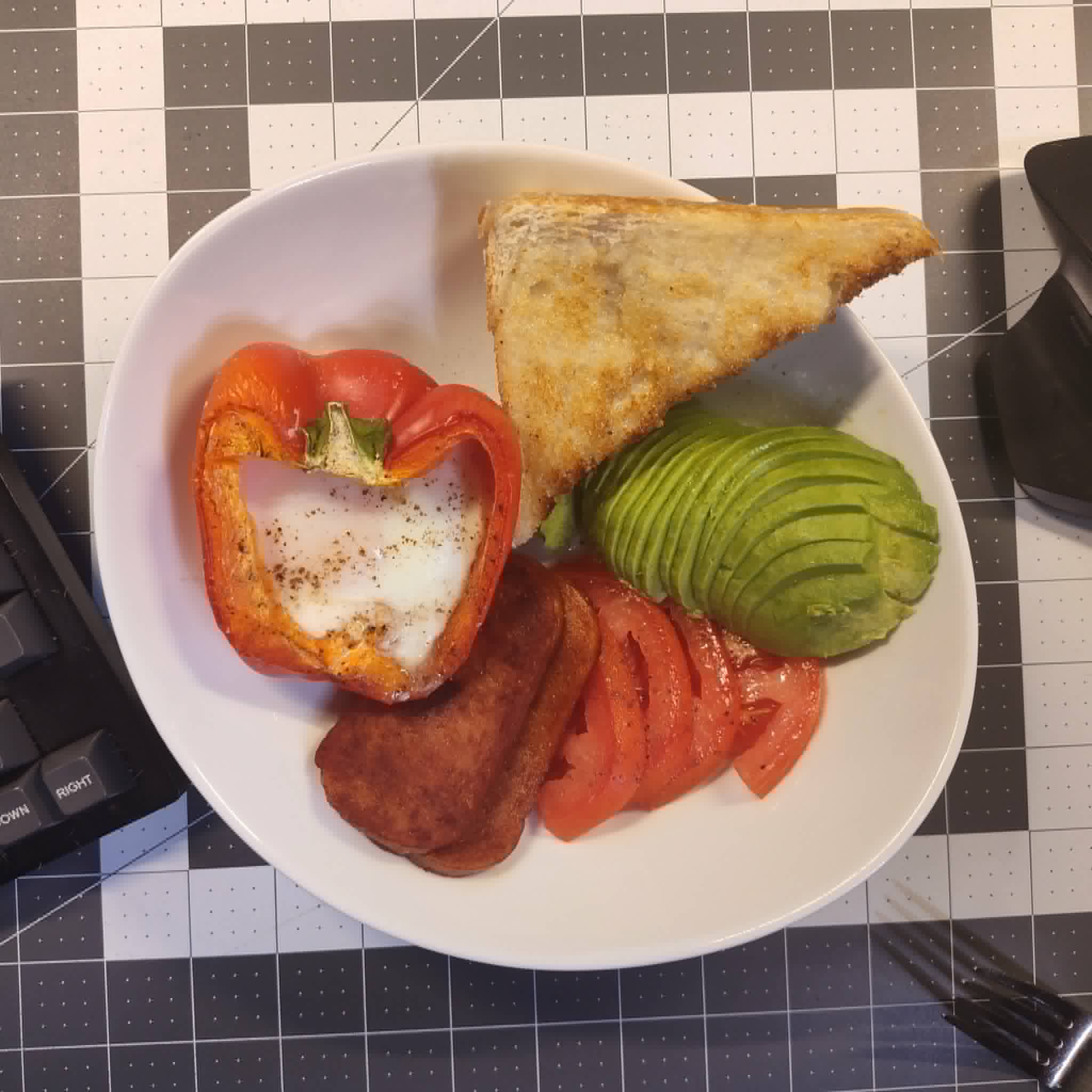
I made myself breakfast. An egg baked in half of a red pepper. A couple slices of Korean BBQ SPAM. Half an avocado. Half a tomato. Half of a very thick slice of homemade bread, toasted just enough. Nothing fancy; just food that sounded good and felt like the right thing to make.
I sat down at my desk, ate breakfast, and started catching up on everything I had missed while I was offline - then I saw a post from Mike Park of Asian Man Records and my morning took a very different direction. Reports had surfaced that BrooklynVegan had effectively been gutted, with staff layoffs impacting the publication. Alternative Press, Revolver, and Goldmine appeared to be caught up in the same wave of cuts.
My reaction surprised me, and not because I still read these publications every day. I don’t.
I turned forty in the middle of the COVID pandemic. I haven’t been to a concert since before the world shut down. My daily habits changed. My interests shifted and life moved on. That feeling has been changing this year though – Poison the Well releasing a new album and the what-in-the-fuck-now-that’s-a-supergroup Evil Island, Interpol, and even Chiodos releasing new music has me missing the smell of venues.
Alternative Press and BrooklynVegan were part of my life for a long time. They were where I discovered bands and learned about tours.
They were where I found interviews and stories about scenes that rarely received much attention anywhere else and AP was the last reason I’d head to my local Tower Records during their decline.
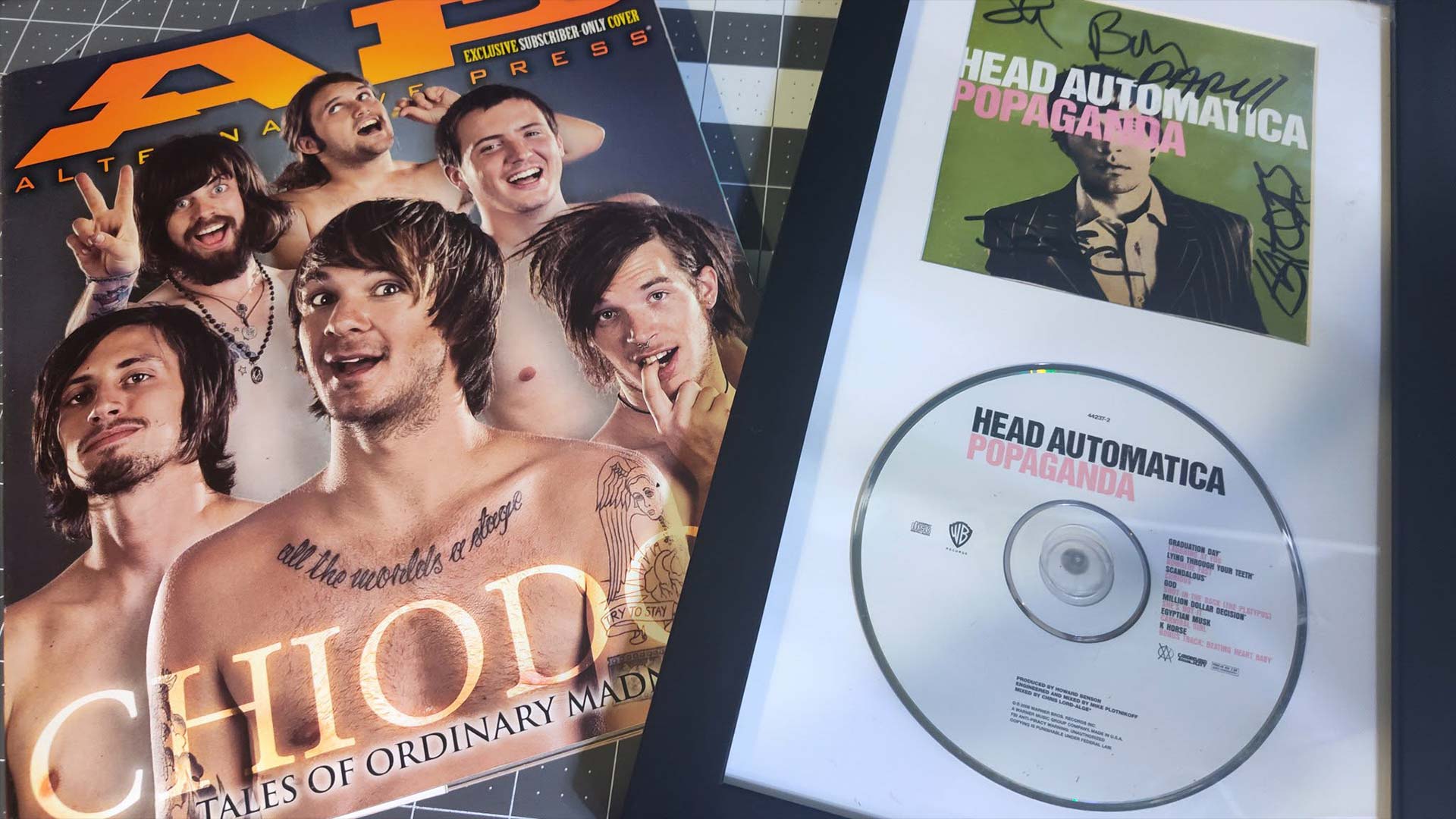
I still have some old issues of AP sitting on a shelf – and a signed Head Automatica CD booklet that was a bonus that came with an issue twenty years ago.
When Publications Disappear, People Scatter
These aren’t valuable collectibles – they are memories and go well beyond the music or the publications themselves. When a publication disappears, people often talk about the content – the articles, website, and brand. People who work in publishing know that a publication is much more than that. A publication is the people behind it.
I worked in publishing during one of the most chaotic periods for magazines.
From 2008 to 2009, I watched the industry contract in real time. Titles disappeared, teams were reduced, and people who had spent years building expertise around a particular audience suddenly found themselves looking for work.
There were days when the news circulating around the office felt like a listing of casualties. Another one gone, another magazine closed, and another team displaced – followed by another group of people trying to figure out what comes next. A show at the Nokia Theatre or B.B. King’s was a 5-minute walk from my office and often served as an escape from the workday.
The Machinery Behind the Masthead
Readers often don’t see the machinery behind a publication - they see the byline, the logo, and the finished product. Inside the industry, you see the ecosystem. You see the editor-in-chief who knows exactly what stories matter to the audience.
You see the managing editor keeping everything moving, writers who understand a scene because they’ve spent years embedded in it, along with photographers, designers, copy editors, production teams, and freelancers who make everything possible. When a publication disappears, all of that knowledge doesn’t disappear because the website goes offline - but it does get scattered.
One of the realities of editorial is that great teams often move together. An editor takes a new role somewhere else and brings trusted people along. A publication is rebuilt with people who already understand each other. That is how institutional knowledge survives. When multiple publications disappear at once, that safety valve disappears too.
The Hot Stove Lesson
This is also why conversations around ownership matter. Whenever a publication closes, there is a predictable reaction: “Corporate ownership ruined another one.”
Sometimes that reaction is too simplistic.
Private equity, investment firms, and larger corporate owners are not all identical. There are examples of companies that have grown successfully after acquisition. That said, there is also a reason people in certain industries develop caution around these situations. Experience.
I learned that lesson while working at Latina Magazine during the period when Solera Capital was the majority owner. I don’t bring that up because I think every investment firm operates the same way - I bring it up because I was there.
I watched what happens when the priorities of ownership and the realities of operating a publication begin to drift apart. The public record around that period includes reports of lawsuits, unpaid wage claims, and disputes involving freelancers and staff. Those issues are documented, and they contributed to the perception that the publication was struggling financially and operationally.
For the people inside the organization, though, it was much more personal.
It was watching coworkers worry; talented people wondering whether their work would continue to exist. It was watching something with decades of history become increasingly difficult to sustain. After living through that, I became more cautious about working for companies primarily owned by investment firms.
Not every situation is identical, but sometimes you only need to touch a hot stove once before you start checking the handle.
More Than Words on a Page
The frustrating thing about losing publications like Alternative Press and BrooklynVegan is that they represented something increasingly rare. They were communities and documented scenes. They helped people find music that mattered to them, gave artists a place to be discovered, and gave fans a place to belong.
The internet was supposed to make this easier. Instead, we ended up with fewer independent voices, more consolidation, and an increasing dependence on platforms that can change their rules overnight.
Websites go offline, tastes change, companies decide a title no longer fits its strategy – but the people who built those communities still matter. The writers, editors, and memories helped us create still matter.
The Things We Carry Forward
That AP issue on my shelf is not valuable because of the paper it is printed on - it’s valuable because it reminds me of who I was when I read it. It’s a reminder of the bands I discovered, the hundreds of shows I attended, and the friendships created along the way.
Those are the elements companies often miss when they reduce a publication to a line item. They are not just selling words; they’re stewarding pieces of people’s lives – and their disappearance is felt no matter how much distance time creates.
The pain in my hip that I’m still experiencing became a familiar sensation as I wrote this. I took a bad fall at a Bear vs. Shark show years ago and limped to a 7-11 for a Slurpee and some Tylenol – throw in some White Castle after getting off the train from Manhattan and that was my post-show ritual.
I don’t remember every song they played that night. I don’t remember the opening bands. I don’t remember what I was wearing - but I remember the feeling. I remember being young, exhausted, excited, and completely convinced that standing in a sweaty venue watching a band only a few friends had never heard of was exactly where I was supposed to be.
That’s what publications like Alternative Press and BrooklynVegan preserved well past the articles, interviews, and announcements – they preserved moments. They documented scenes that existed because people cared enough to show up, write about them, photograph them, and share them with others.
Companies can buy publications. They can merge brands or decide that a title no longer fits a strategy - but they can’t buy the memories that those publications helped create. I think that’s the part that is hardest to explain when another publication disappears. The value was never just on the website, but in everything that happened because it existed.
Contents
Tags
Recent Posts
-
observation
 9/11: 25 Years Later
-
self-hosting
 Bumping Integrated GPU Memory Limits
-
self-hosting
 Containerized ComfyUI with ROCm 10 on the Minisforum N5 Pro Running TrueNAS
-
observation
 Under Our Own Power
-
infrastructure
 What Does “Zero Trust” Actually Mean?
-
What Happens When a CVE Becomes a KEV?
-
The Language We Inherit From Machines
-
DNS Decisions: Recursive, Authoritative, and Forwarding Explained
-
The Real Watermark is You
-
I Like My Web Servers Basic AF