We’ve all been asked the question, “what do you want to be when you grow up?”
My answer was easy – a pyrotechnician.
Fireworks fascinated me: the chemistry, the engineering, and the spectacle. If you’d asked thirteen-year-old me where my career was headed, information technology wouldn’t have made the list.
Looking back, I think we’ve been asking the wrong question. Instead of asking kids what they want to become, maybe we should ask what they’re curious enough to spend an entire afternoon figuring out. Careers don’t begin with plans; they begin with sparks.
One of my earliest sparks came from a childhood memory that I’m not even sure I remember correctly anymore. I have this vivid image of watching Mr. Rogers’ Neighborhood as a kid while he repaired a bucket using solder. Whether my memory has embellished the details over the years almost doesn’t matter. What stuck with me wasn’t the bucket; the idea that things could be repaired.
That if you understood how something worked, you could put it back together.
The Shack
A handful of years later, I convinced my mother to take me to RadioShack. The one near me was located in a shopping mall; it had a 2-story Woolworth’s so other errands can be taken care of on the trip, and I’d always figure out a way to make sure we parked in a lot that led to crossing the Famous Amos cookie stand.
Hiring Managers: Strategy, leadership, chocoate chips. Boom.
I walked out with my first soldering iron, a spool of solder, flux, breadboards, resistors, diodes, and a handful of other components that looked important enough to deserve space on my desk.
This scene from Young Sheldon feels a little too real.
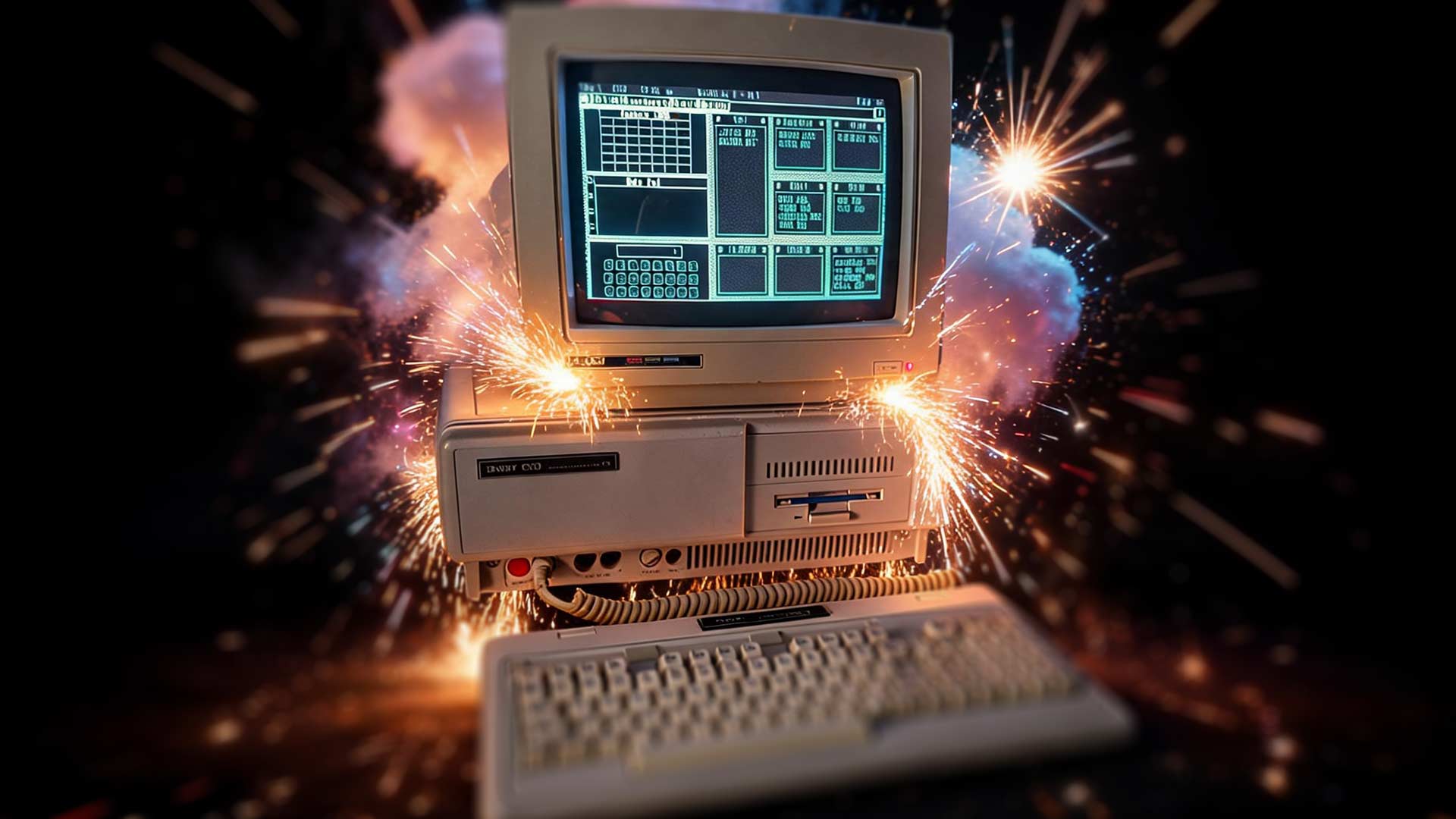
Around the same time, I was sitting in front of my Tandy 1000TX 286 writing what I proudly believed was artificial intelligence in GW-BASIC. In reality, it was an input statement followed by an embarrassing number of IF…THEN conditions. If someone typed one thing, my program responded one way. If they typed something else, it responded differently.
By anybody’s standards, it wasn’t AI. To thirteen-year-old me, it absolutely was – and that was enough. A few years later, another spark arrived from a completely different direction.
i33t Hax0R
Like a lot of teenagers in the mid-1990s, I caught the Visual Basic bug. Someone showed me an AOL program, and suddenly I wanted to understand how Windows actually worked. That curiosity led me to a copy of Visual Basic 3 and Dan Appleman’s Visual Basic Programmer’s Guide to the Windows API.
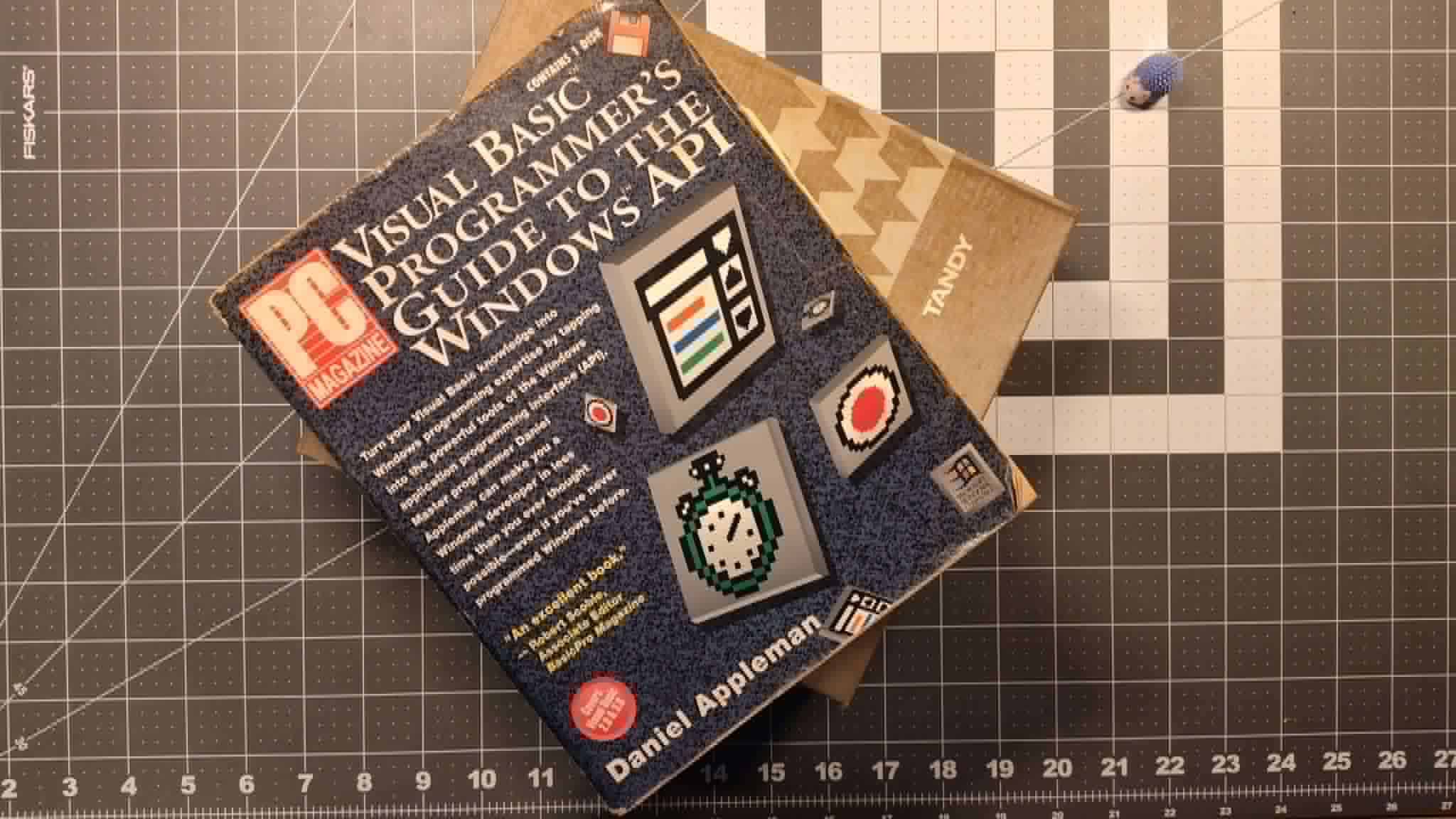
Learning the Windows API felt like discovering there was another floor hidden inside the building I’d been living in. Subclassing windows, intercepting messages, and responding to events felt like having control over time and space. Software wasn’t just code anymore - it reacted. Each discovery led to five more questions.
Eventually I was writing little AOL utilities that responded to things happening in chat. Entirely innocent, of course. Mostly.
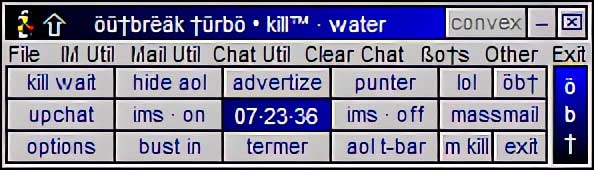
Give me a break. It was 1996.
The point wasn’t what I was building, but that every small discovery unlocked another one. Discovery became implementation, implementation exposed limitations, and limitations led back to discovery. That loop has followed me through every stage of my career.
Publishing Precursor
Then came a spark that didn’t reveal its importance until almost a decade later. The summer before my senior year of high school, I took a job with Rosebrooke Publishing. At the time, it was just a summer job. I had no plans to work in publishing. None.
The company was owned by Victor Maiorana, an educator, author, publisher, and former NASA engineer who had worked on the Lunar Module program. Working alongside someone whose career crossed so many disciplines quietly challenged my assumptions about what a career could look like. I also built my first professional website.
When summer ended, I assumed publishing was behind me. Nine years later, I accepted an offer to become IT Director for Latina Magazine without a second thought. Only then did I realize that the spark had never gone away.
I’d already seen manuscripts become books. I watched ideas move through editing, design, production, and printing. That little summer job had been sitting quietly in the background for almost a decade, waiting until another opportunity connected to it. I just didn’t know it at the time.
Exposure Matters
A couple of years later, my first job in IT would eventually lead me to work with youth entrepreneurship programs through the Network for Teaching Entrepreneurship. Watching young people discover what excited them reinforced something I’d already lived without realizing it.
Exposure matters. Not because every kid needs to become an engineer, but because every kid deserves enough opportunities to discover what captures their imagination. Sometimes that happens through entrepreneurship – or writing, or robotics. Sometimes it happens by wiring an LED to an Arduino and wondering what else it can do.
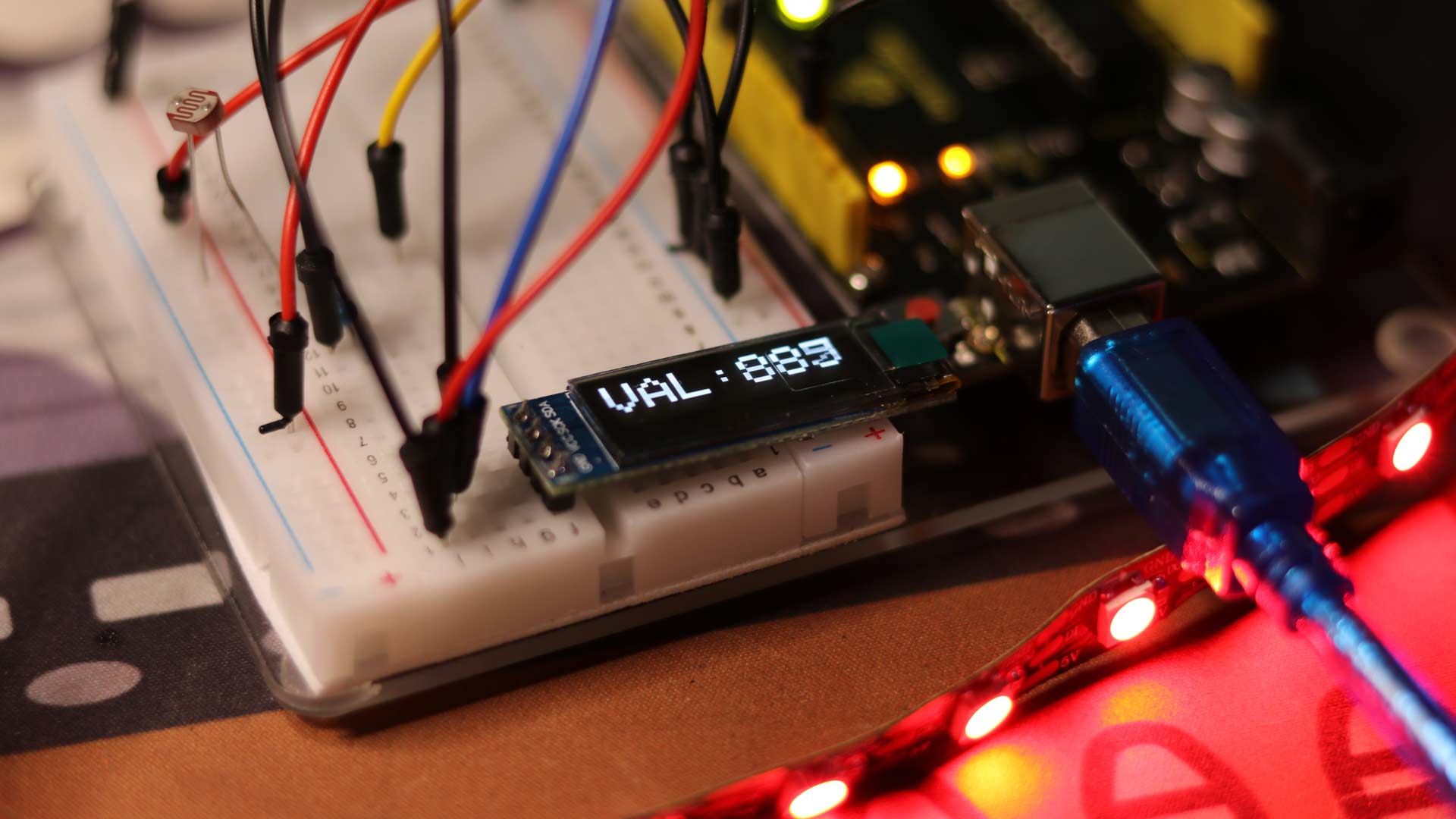
A Raspberry Pi isn’t quite the impulse purchase it used to be, but an Arduino is still inexpensive, approachable, and capable of teaching programming, electronics, troubleshooting, systems thinking, and patience. Not through lectures - through feedback. An LED doesn’t care what your intentions were. It either lights up or it doesn’t, and then you figure out why. Opportunities to create those initial sparks have never been more accessible.
I never became a pyrotechnician. That idea never really got past taking a trip to Chinatown in the days leading up to the 4th of July. And some cantaloupes.
Blowing Things Up
Although, depending on how you look at it, maybe I did. I still spend a lot of my time blowing things up. The difference is that I usually do it so I can put them back together better. Networks, servers, websites, marketing strategies, even ideas. Tear them apart, understand them, rebuild them, and leave them a little better than you found them.
Looking back over the last few decades, I’ve stopped believing that careers are built by master plans. They’re built by sparks - the conversation with someone you’ll remember years later, the book you almost didn’t buy, and the summer job you never expected to influence career advancement a decade later.
The piece of software that makes you ask, “Wait…how did they do that?” The Arduino that teaches someone to think like an engineer before they even realize that’s what they’re doing. We spend a lot of time asking kids what they want to be.
Maybe the better question is:
What are you curious enough to spend hours exploring without anyone asking you to?
Sparks don’t predict destinations; they simply make the journey possible - and sometimes, the smallest spark doesn’t reveal where it was leading until years later.
Contents
Tags
Recent Posts
-
observation
 9/11: 25 Years Later
-
self-hosting
 Bumping Integrated GPU Memory Limits
-
self-hosting
 Containerized ComfyUI with ROCm 10 on the Minisforum N5 Pro Running TrueNAS
-
observation
 Under Our Own Power
-
infrastructure
 What Does “Zero Trust” Actually Mean?
-
What Happens When a CVE Becomes a KEV?
-
The Language We Inherit From Machines
-
DNS Decisions: Recursive, Authoritative, and Forwarding Explained
-
The Real Watermark is You
-
I Like My Web Servers Basic AF