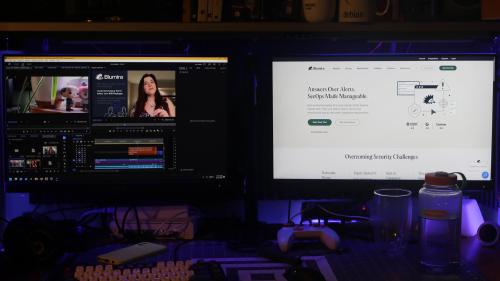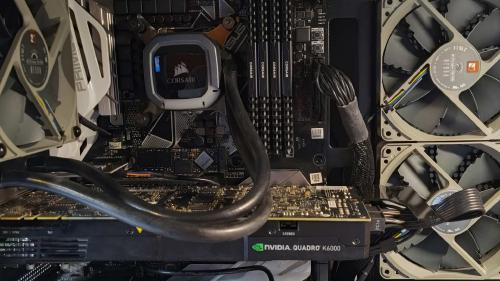
A few weeks ago, I was looking at a PC I helped build, sitting next to a PlayStation, and asked a friend’s son a pretty ordinary question.
“Do you use the PC for gaming?”
The answer I got back caught me off-guard; so much so that I ended up going outside and sitting on my friend’s front porch for a moment. What he said wasn’t much of a surprise, but it said so much about how he’s come to understand and work with technology, and it was like something coming full circle - unintentionally.
The first CIO I answered to at my first job, Dan, told me something repeatedly:
“Computers are tools, not toys.”
Dan was an intense person and had a rigid view of technology. He had a rigid view of many things, once explaining that he only drinks water when it’s in his coffee or whisky. In the environment we were working in at the time, the philosophy made sense. We were managing a network with very few resources. Computers existed because we needed them to accomplish something.
I’ve never said the phrase out loud. In the right context, it makes sense, but it was way too stern to come from me. My friend’s son, however, came to the same conclusion on his own. I’ve known him since he was born. His father asked me to help him get interested in technology without forcing it on him as he entered his teens, so I started small.
We worked with an Arduino and built little projects that had purpose in his world. We controlled an LED light strip to illuminate the bookshelves in his bedroom. Once he was able to do that on his own, we moved on to adding a light sensor so the LEDs would turn on when the bedroom light was off. He learned how the pieces worked together and, more importantly, learned that he could make something happen - he could solve a problem.
When he had learned enough to move beyond the basic Arduino, we went out for pizza, and I gave him an Arduino Mega 2560. He saw it as a prize, while I saw it as more capability. There were more resources available to him, and therefore more things to explore and learn from.
Eventually, he got a Raspberry Pi. We mounted it to the same board as the 2560, and it became his introduction to Linux and working at a command line. A couple of years later came another lunch and another piece of technology: a mini PC. This time, he began teaching himself about virtualization, eventually setting up his first Proxmox host. Earlier this summer, with his first year of college completed, we built a full PC around the interests he’s developed over the past four or five years.
Once I came back in from the porch, he thanked me and said that, looking back, it was clear that I had a plan for him. I didn’t - at least not the kind of structured plan he imagined. I was simply paying attention. When he demonstrated that he was ready for something more, I made sure it was available to him. We made changes as his interests changed, and he eventually no longer needed me to tell him what to do next. He figured out that part on his own - and to me, that’s what good recognition looks like.
Recognition as propulsion
I’ve never had a problem with recognizing someone for doing a good job. People should know when their work matters. Someone who solves a difficult problem, creates something useful, helps others, or demonstrates an ability they didn’t have before deserves to hear that somebody noticed.
Over time, I’ve become increasingly interested in what happens after recognition. Some recognition is essentially a checkpoint; you did something and people acknowledged it. Maybe you received a trophy or certificate, a nice dinner, a social media post, or some other marker that says you accomplished something - and then it ends. I prefer recognition that creates momentum. Other forms of recognition, ones that say you did something well and are ready for what’s next, are fundamentally different and led me to think about the idea in terms of spaceflight.
A spacecraft needs an enormous amount of energy to leave the surface of the Earth. The Space Shuttle used two Solid Rocket Boosters to provide much of that initial thrust. They didn’t stay attached for the entire mission, and that was by design. The boosters provided the thrust needed during one part of the journey, separated from the vehicle, and were recovered for future launches.
I think that’s a pretty good model of how recognition and mentorship should work. A good push doesn’t last forever; it just needs to get you to the next stage.
The booster isn’t the destination
Imagine if we treated the booster as the most important part of the launch, celebrating it more than the spacecraft itself. Imagine the spacecraft spending the rest of its journey talking about how impressive it was that it had once been attached to a booster.
Talking spaceship aside - this sounds ridiculous, doesn’t it? The booster did its job by providing enormous amounts of energy when that energy was needed the most, and then it separated while the spacecraft continued. The booster did what it needed to do, and I think recognition can work the same way.
An award can be useful when it provides momentum; it can introduce opportunities, foster confidence, enable access to resources, and open new doors. It can tell someone that other people have noticed something they’re doing and encourage them to explore it further. On the other hand, if the recognition becomes the destination, something has gone wrong. The achievement becomes an anchor rather than a launch point.
We’ve all seen some version of this. There was a long-running joke about Al Bundy from Married… With Children constantly talking about scoring four touchdowns in a high school football game.
The achievement isn’t the funny part. He really did score four touchdowns during a game, as a fullback, during that legendary 1966 season at Polk High. The funny part is that decades later, it’s still one of the defining accomplishments of his life. The booster never separated, the vehicle never left the launchpad, and he became a damn fine salesman of women’s footwear instead of pushing ahead with his dream to play in the NFL.
Mentorship is reusable
The more I think about this, the more I like the other part of the spaceflight metaphor. Those boosters weren’t simply discarded - they came back, were refurbished, and used again. That’s mentorship.
A mentor doesn’t need to remain attached to someone forever. In fact, I think the opposite is usually a sign that the relationship is working, as the goal of mentorship isn’t to make someone permanently dependent on the mentor. It’s to help someone develop enough capability that they eventually don’t need the mentor for the things they once did.
A mentor provides thrust; they help someone through a difficult stage and then they separate. Ideally, they come back around and do it again for someone else. This doesn’t make the previous relationship any less meaningful; it means it worked and the person kept moving forward under their own power.
The best reward may be another problem
Technology is almost perfectly suited to this model because there’s always another problem. You learn the Arduino - here’s a more capable microcontroller. Then you learn the Raspberry Pi - here’s Linux. Linux leads to a computer you can experiment with. You learn about virtualization, and now you can build something larger.
At every stage, the reward isn’t necessarily an object; it’s possibility. The thing you just learned gives you access to something you couldn’t do before, and that’s what happened over that handful of years. The Arduino wasn’t the reward; it was the first stage. The Raspberry Pi was the next stage, and the mini PC was the stage after that. Even the custom PC wasn’t really the reward for everything that came before it. Instead, it was recognition that he had developed enough capability, and enough of his own interests, to start deciding what came next - and eventually, he didn’t need someone else to decide. That’s the part I find most rewarding.
What’s next?
I think that’s the question recognition should create.
Not “what did I win?” but “what’s next?” This doesn’t mean awards are bad or meaningless, and it certainly doesn’t mean we shouldn’t celebrate achievements. It simply means that I think we should pay more attention to what recognition causes people to do afterward. Does it encourage them to keep going, give them new capabilities or opportunities, or spark curiosity about what they might be capable of next?
Those outcomes are much more interesting, and critical, to me than the object, certificate, title, or announcement used to recognize the achievement. Looking back as I write this, I’m starting to realize why I was never particularly attached to awards myself. Well, maybe except for one…
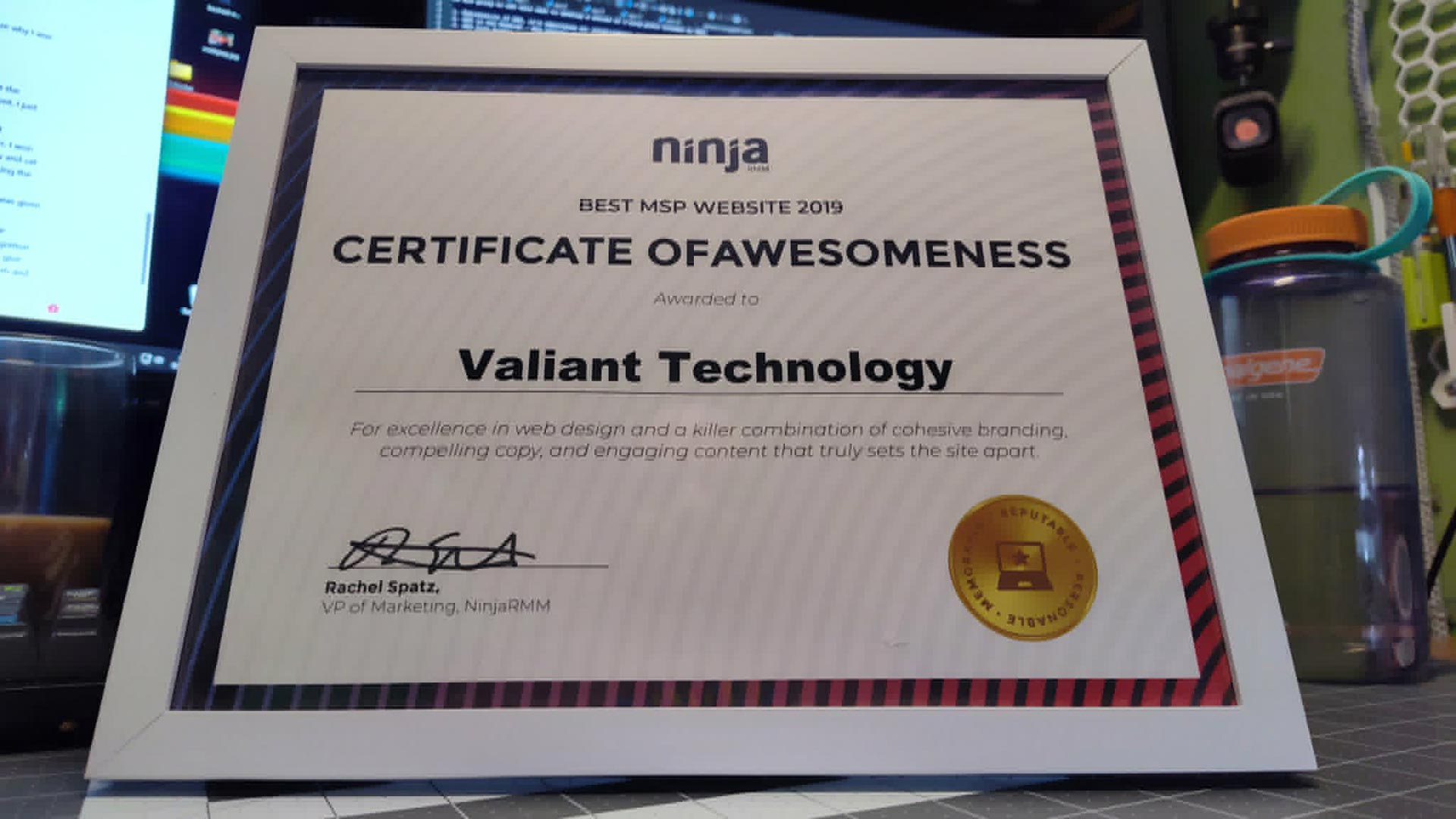
Some of my past work is “ofawesomeness” certified. Beat that.
At some point in the early 90s, I was part of a National Junior Honor Society induction. My classmates arrived at the ceremony dressed up while I wore plaid shorts and a Batman Returns tee. I wasn’t trying to make a statement; I just didn’t care very much.
A few years later, I won second place at a SUNY STEP summer camp for a science project that involved administering stimulants and depressants to Daphnia and observing their behaviors. The following summer, I won another award for another project. Both times, I walked up to the podium, said a quick “thank you,” accepted the trophy, and sat back down.
The opportunity to attend the summer camp and be exposed to a college atmosphere - something that was the result of teachers making the recommendation - was recognition for a productive school year. The trophies were just “flair.” I have no idea where either trophy ended up, but I do remember what happened with the technology I was given over the years: the TRS-80 I destroyed, the Apple II+ I destroyed, the Tandy - well, you get the idea.
My friend’s son standing next to his PC and a PlayStation, telling me what he used the computer for is the distinction I’ve been trying to articulate for some time without having the words for it.
I don’t need recognition to become a monument to what someone has already accomplished. I’d rather see it become propulsion; give someone a reason to keep going, provide them with a tool or an opportunity, give them a tougher problem, and enough thrust to reach the next stage - and then let go, just as the spacecraft was never supposed to stay attached to the booster. It was supposed to keep going.
Contents
Tags
Recent Posts
-
observation
 9/11: 25 Years Later
-
self-hosting
 Bumping Integrated GPU Memory Limits
-
self-hosting
 Containerized ComfyUI with ROCm 10 on the Minisforum N5 Pro Running TrueNAS
-
observation
 Under Our Own Power
-
infrastructure
 What Does “Zero Trust” Actually Mean?
-
What Happens When a CVE Becomes a KEV?
-
The Language We Inherit From Machines
-
DNS Decisions: Recursive, Authoritative, and Forwarding Explained
-
The Real Watermark is You
-
I Like My Web Servers Basic AF