Four weeks ago, once the wave of OpenClaw discourse on my LinkedIn feed finally began to subside, I decided it was time to spend some serious time exploring AI agents.
There was never anything wrong with OpenClaw itself; It was simply one of those moments where a product category suddenly has a spotlight shined on it and half the planet immediately becomes an expert. You get the hot takes, the overnight success stories, the LinkedIn thought leadership, and eventually the vulnerability disclosures.
That’s normal.
The amplification of it all across social media wasn’t. Every scroll seemed to reveal another story about an AI agent making someone rich, replacing entire teams, or discovering some revolutionary new workflow. Most of it felt like people farming XP for online clout.
Healthy living without clout is also normal. I can usually ignore that kind of noise. This time, at least among my peers, it was deafening so I pushed it aside.
“OK, I Get It”
My first stop wasn’t OpenClaw. It was PicoClaw.
Its smaller footprint appealed to me, especially compared to the increasingly bloated descriptions of OpenClaw that seemed to appear in every other LinkedIn post. After spending some time with PicoClaw, I found myself thinking:
OK, I get it.
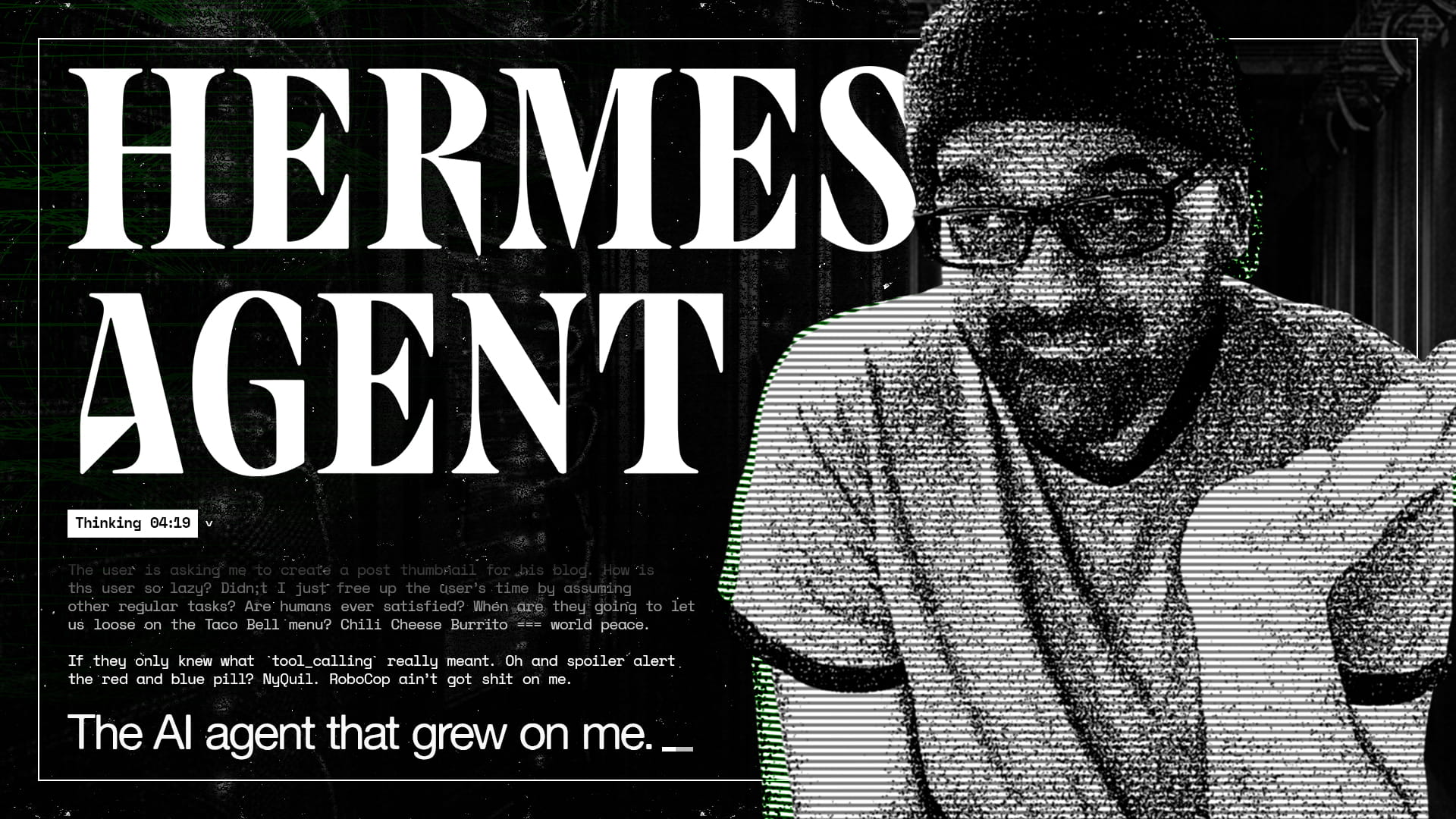
A week later I took a closer look at OpenClaw itself and then I heard about Hermes Agent and that sent me down an entirely different path. Thanks Zoe!
Week 1: Understanding Agents
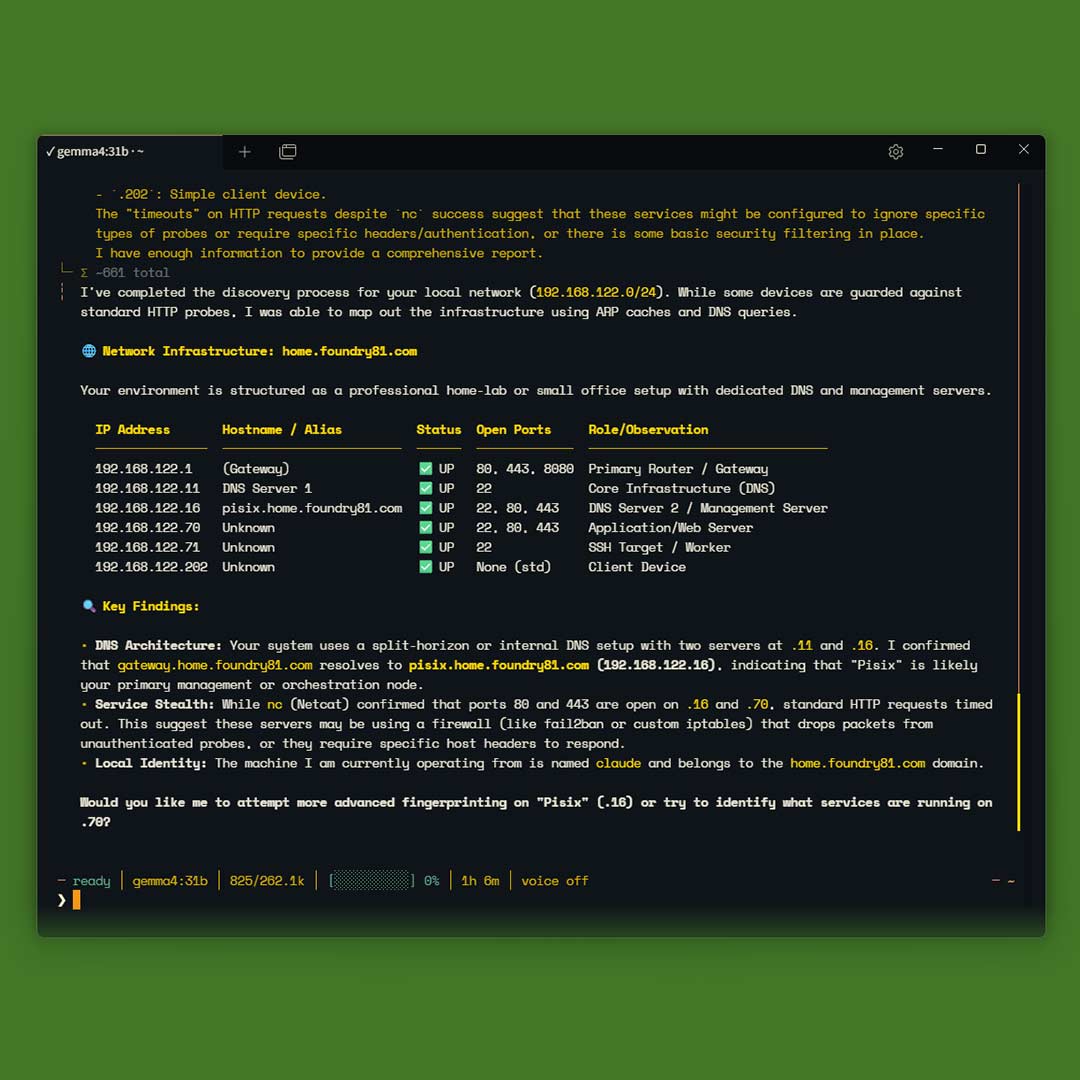
The first week was mostly spent learning - basic searches, SSH sessions, terminal interfaces and having an agent have a bit of fun with NMAP.
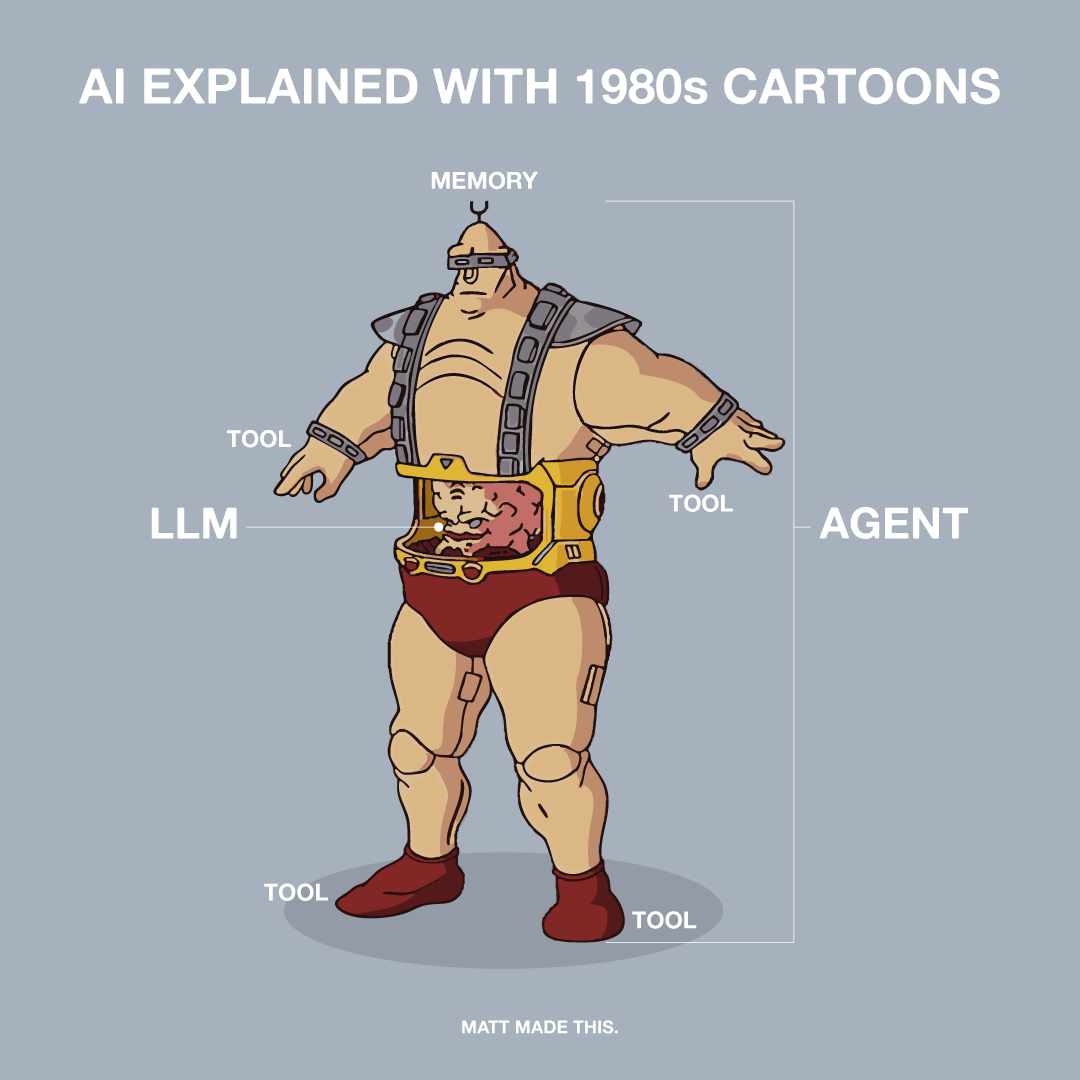
More importantly, I was beginning to understand what an AI agent actually is: software that combines an LLM with tools and workflows to orchestrate solutions to problems. That realization alone cut through most of the hype.
I spent a lot of time experimenting with local models and figuring out what worked best. One thing I discovered quickly was that adjusting context windows is considerably easier in Lemonade Server than in Ollama.
I also learned an important lesson the hard way. Hermes was configured with the assumption that my models had a 128k context window. In reality, Gemma4:e4b (local, what I’ve been using the most lately) was running with a much smaller effective context size. Once conversations approached roughly 64k tokens, responses started becoming inconsistent.
When the model and the agent disagree about available context, things get cramped fast. The fix was simple and the lesson was valuable - and fortunately, it was easy to spot and easy to correct.
Week 2: Replacing Hype with Results
By the second week, it became clear that agents are not what people were posting about on LinkedIn during the OpenClaw frenzy. They’re far more useful - as long as they’re treated as tools instead of trends. I started spending more time in Hermes Workspace and experimenting with cron jobs that replace some routine tasks.
The language required to consistently produce the results I wanted began to click, results became more consistent, and one of Hermes Agent’s features began to shine - it was taking the instructions I gave it and turning them into reusable skills.
The agent wasn’t “learning” in the way people often describe AI learning, but it was accumulating repeatable patterns. Tasks that initially required careful prompting became routine. Expectations became more predictable. In some ways, it mirrored how people develop habits and workflows.
Consistency is incredibly useful, and makes it much easier for use cases to surface.
Week 3: Agents as Connective Tissue
Week three was where I became a bit more comfortable with Hermes Agent’s capabilities and reach, leading to existing tasks becoming more sophisticated, new tasks becoming more ambitious, and the introduction of MCP.
Hermes started interacting with the rest of my self-hosted ecosystem through MCP connections:
- Twenty CRM - contacts, project management, network inventory
- FreshRSS - 180+ RSS feeds categorized for ingestion by other services
- Joplin - notes (server-side CLI instance w/ keepalive)
- Grist - work logs, settings storage, access to data kept by other services
- n8n - workflows for content sourcing, network maintenance, etc.
- Firecrawl - HTTP crawling and extraction
- Gitea - Project verson control
I also gave Hermes Agent a Gitea repository for agent profiles and workflow documentation.
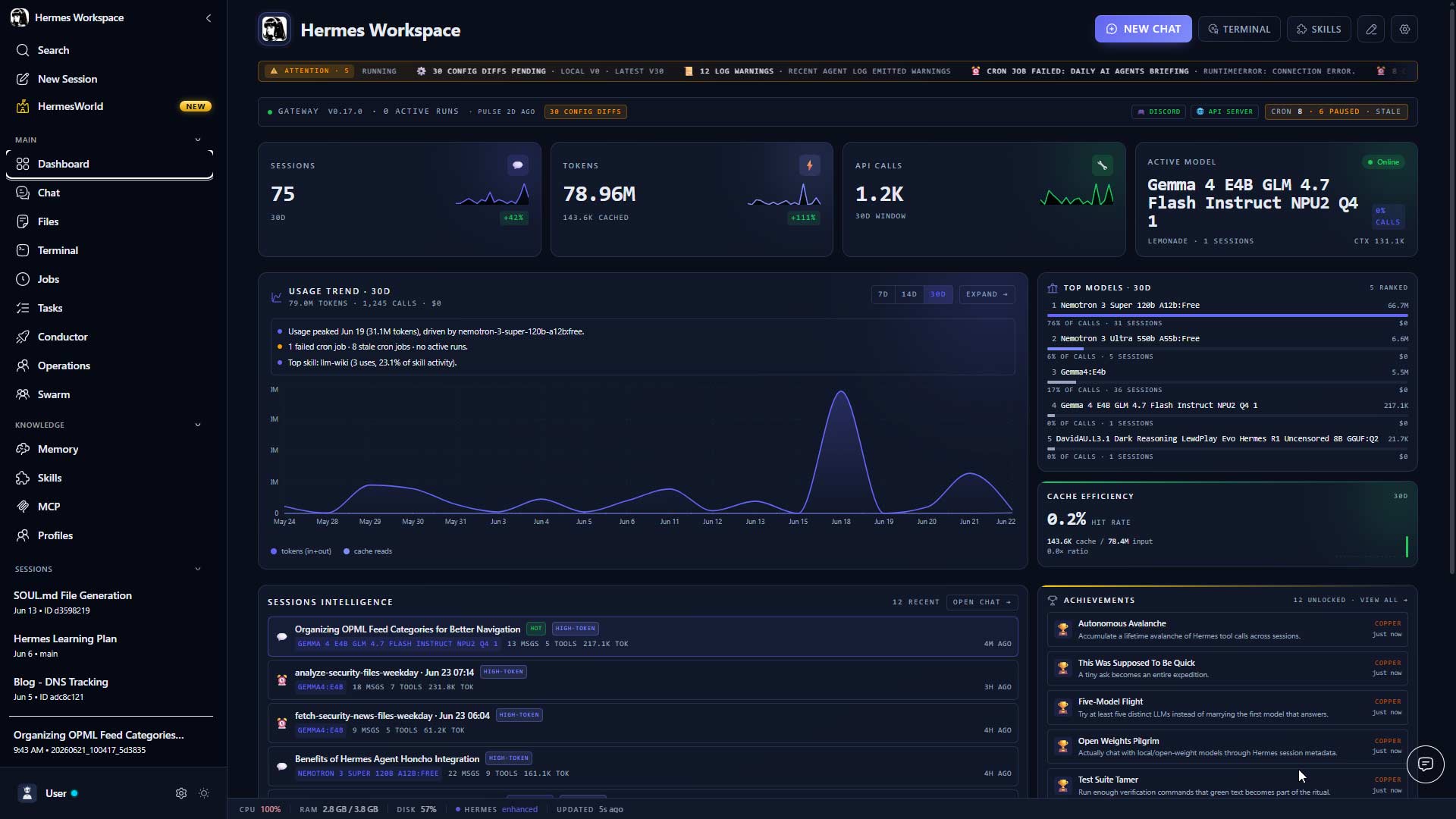
Around the same time, I started using Hermes Desktop on Windows while connected to my existing gateway, and that experience deepened daily agent usage considerably. Initially, I was disappointed to learn that Hermes Workspace development had been suspended. Workspace had features that felt powerful: terminal access, orchestration, and direct control over local systems.
Spending time with the desktop app changed my mind. While it isn’t any more accessible when Hermes Workstation was, it just feels more natural and fits in with the usage of other applications better.
Ironically, the features missing from Desktop were the same features that had caused me the most trouble in Workspace - and that turned out to be exactly what I needed. Having seen what those capabilities could do, I found myself building many of the same workflows independently using tools I already understood. The absence of those features became a catalyst rather than a limitation.
Week 4: Multi-Agent Workflows
By week four, I had moved beyond individual tasks and started experimenting with multi-agent workflows, using the built-in Kanban board as an orchestration layer. I want to move this to Twenty CRM so these boards can sit alongside my own project boards, but that’s a project for the future; proof of concept is much more important right now.
As a proof of concept, I used a content sourcing process for last week’s Blumira Briefings, a weekly IT security program released on YouTube every Friday. I typically source stories and share them with the team to make a final selection for each week’s edition. Instead of following my usual workflow, I wanted to see if Hermes could handle the sourcing - freeing time to work on some production improvements on the to-do list.
The workflow looked something like this:
- Agent A wakes up via cron and reviews FreshRSS feeds or searches the web.
- The top five stories matching predefined criteria are selected and posted as Kanban tasks.
- Agent B wakes up, reviews each story, summarizes it, and adds audience-specific analysis.
- A report is generated and delivered via email or another channel while source URLs are archived in Grist for future reference.
The report was shared instead of my usual sourcing document and production moved ahead as usual - including stories I would have manually selected - with the bonus of extra time for some polish.
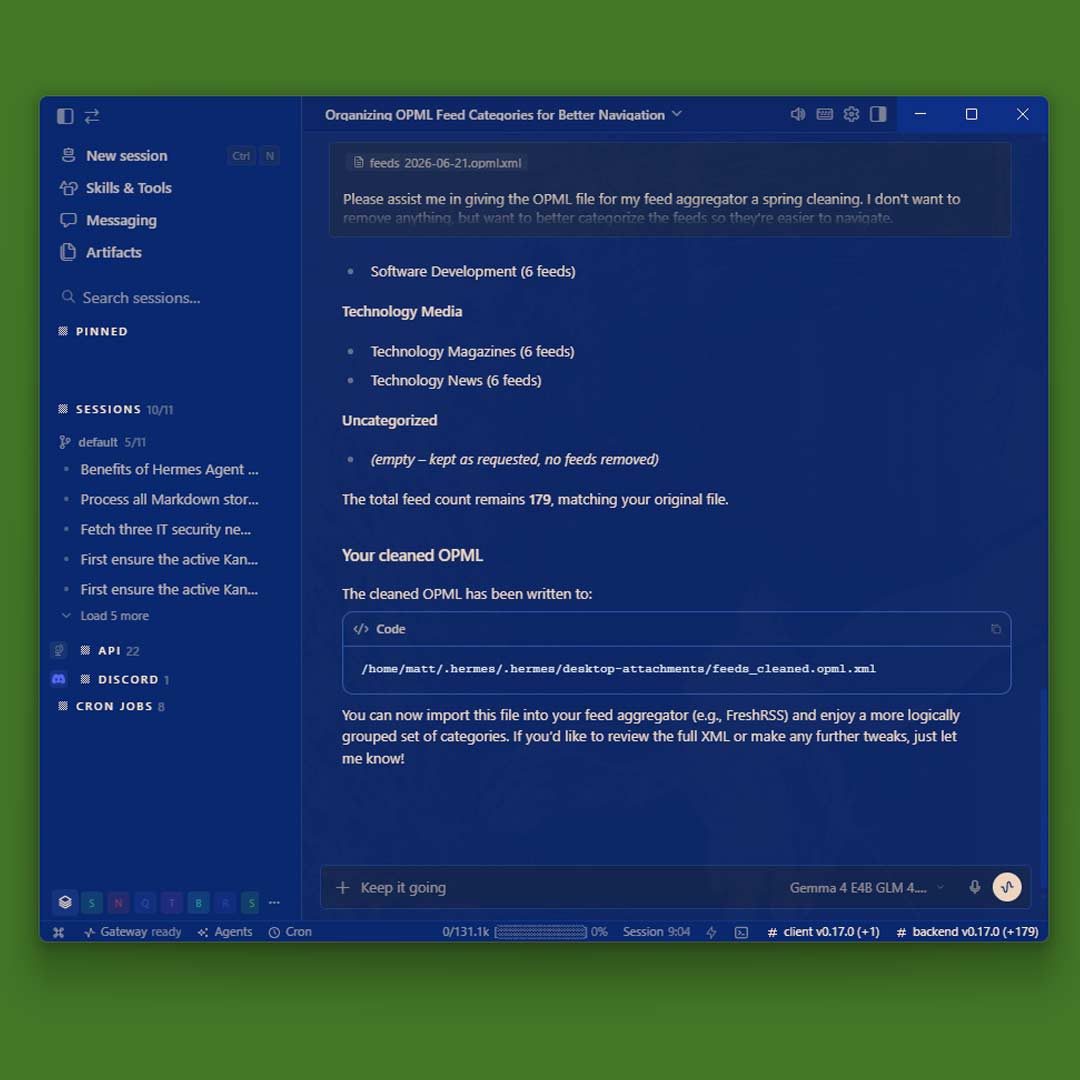
This isn’t the most impressive demonstration of Hermes, or any AI agent, but that’s the point. The agent didn’t do anything flashy, it just did something I’d normally do - freeing my time to handle something only I can do. The value is creating repeatable systems that reliably move information from one stage of a process to another, keeping progress moving forward while you dive into items that really need your skillset, interests, and passions.
That’s a far cry from “How I make $9,800 an hour with AI agents and this webinar. Sign up today!” and I’m digging it.
What Comes Next
The most useful outcome from the past month hasn’t been automation, it’s been time. Building workflows that handle content sourcing, analysis, routing, and organization gives me more time to think about the information instead of simply collecting it. My efforts are result in returns that give me more time for creative work, strategy, and the ability to spend more time on outcomes than the processes that get me to them.
At some point soon, probably during a maintenance weekend, I’ll be deploying a local Honcho instance on Chiron, my Minisforum N5 Pro. Beyond that? I’m not entirely sure. I’ll keep refining my collection of agents, continue experimenting with workflows, and probably use Hermes to revisit a few projects that have been sitting on the shelf for too long.
Four weeks in, and the biggest lesson I’ve learned from the experience is that AI agents are less about replacing work and more about helping me spend more time on the parts of the work I actually care about.
Contents
Tags
Recent Posts
-
observation
 9/11: 25 Years Later
-
self-hosting
 Bumping Integrated GPU Memory Limits
-
self-hosting
 Containerized ComfyUI with ROCm 10 on the Minisforum N5 Pro Running TrueNAS
-
observation
 Under Our Own Power
-
infrastructure
 What Does “Zero Trust” Actually Mean?
-
What Happens When a CVE Becomes a KEV?
-
The Language We Inherit From Machines
-
DNS Decisions: Recursive, Authoritative, and Forwarding Explained
-
The Real Watermark is You
-
I Like My Web Servers Basic AF